

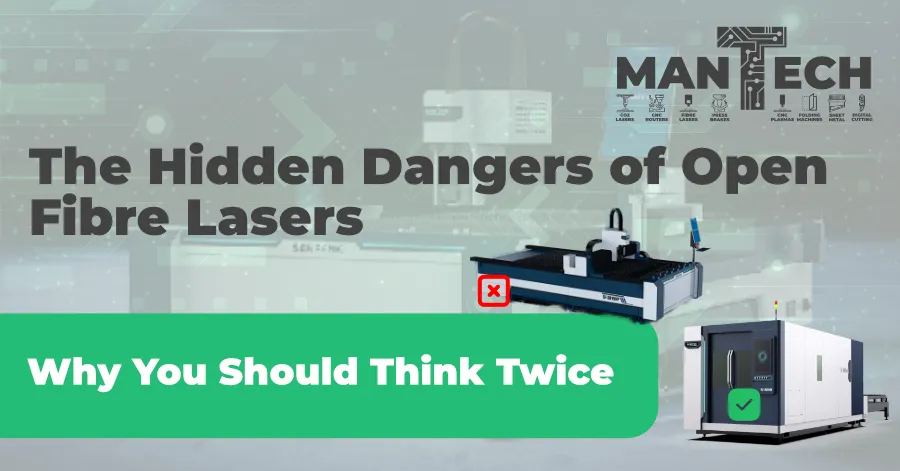
Why You Should Think Twice About Buying an Open Uncovered Fibre Laser
Eye Damage: Even brief exposure to laser radiation can cause permanent eye injuries or blindness. Skin Burns: High-power laser beams can cause severe burns, even at a considerable distance from the cutting area. Fire Hazards: Open lasers significantly increase fire risks due to the possibility of reflections igniting surrounding materials.
Respiratory Health Risks: Inhalation of fine metal dust can cause serious respiratory conditions, including metal fume fever, chronic bronchitis, and potentially increase the risk of lung cancer. Environmental Contamination: Metal particulates can settle on machinery, equipment, and surfaces, creating further contamination and increasing maintenance requirements.
Class 4 Laser Classification: Most fibre lasers fall under Class 4, requiring specific safeguards and comprehensive safety training. Mandatory Protective Measures: Regulatory compliance requires enclosed safety cabins, interlocks, extraction systems, and emergency shutdown systems, which open fibre lasers inherently lack. Risk Assessments and Liability: Failure to comply with regulations can lead to significant legal liabilities, hefty fines, and potential closure of operations.
Higher Insurance Premiums: Due to elevated risks, businesses may face substantially higher insurance premiums. Frequent Safety Audits: Open fibre laser installations typically require more frequent safety audits and monitoring, increasing ongoing costs and administrative burdens. Asset Resale Value: Business owners should also think about the resale value of their assets, a non-compliant open fibre laser would recoup far less than an appropriately guarded system
Enhanced Safety Features: Fully enclosed systems protect operators and bystanders from harm, significantly reducing workplace accidents and injuries. Compliance and Certification: Compliant machines align seamlessly with international safety standards, ensuring your business remains fully operational without regulatory disruptions. Reduced Operational Costs: While enclosed machines might seem more expensive upfront, lower insurance premiums, fewer audits, and reduced risk of workplace incidents significantly offset initial costs over time.