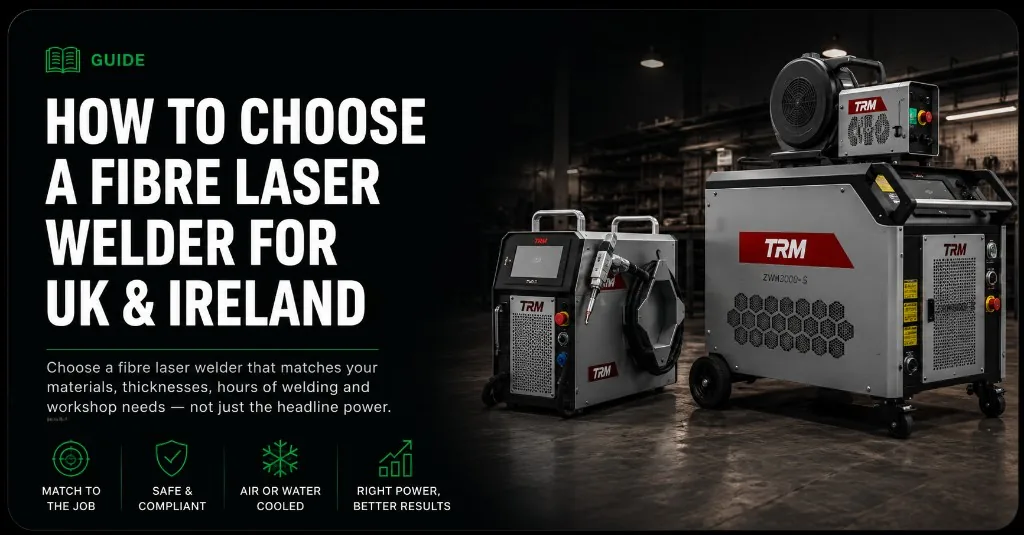
Choose a fibre laser welder from the work you expect it to do every week. Start with the joints, materials, thicknesses and hours of welding, then decide how much mobility, cooling capacity and power the job needs. The highest-output machine is not automatically the right one.
For most workshops, a useful shortlist comes from answering three questions: can the parts be presented with consistent fit-up, will an air-cooled or water-cooled platform suit the working pattern, and has the complete Class 4 laser cell been planned? Those answers matter more than choosing from a headline power figure.
Shortlist from representative joints, not the largest power figure. Compare the four TRM G3 fibre laser welders, place the process within your wider work on the applications hub, and plan the Class 4 cell with the open fibre laser safety guide before you request a quotation.
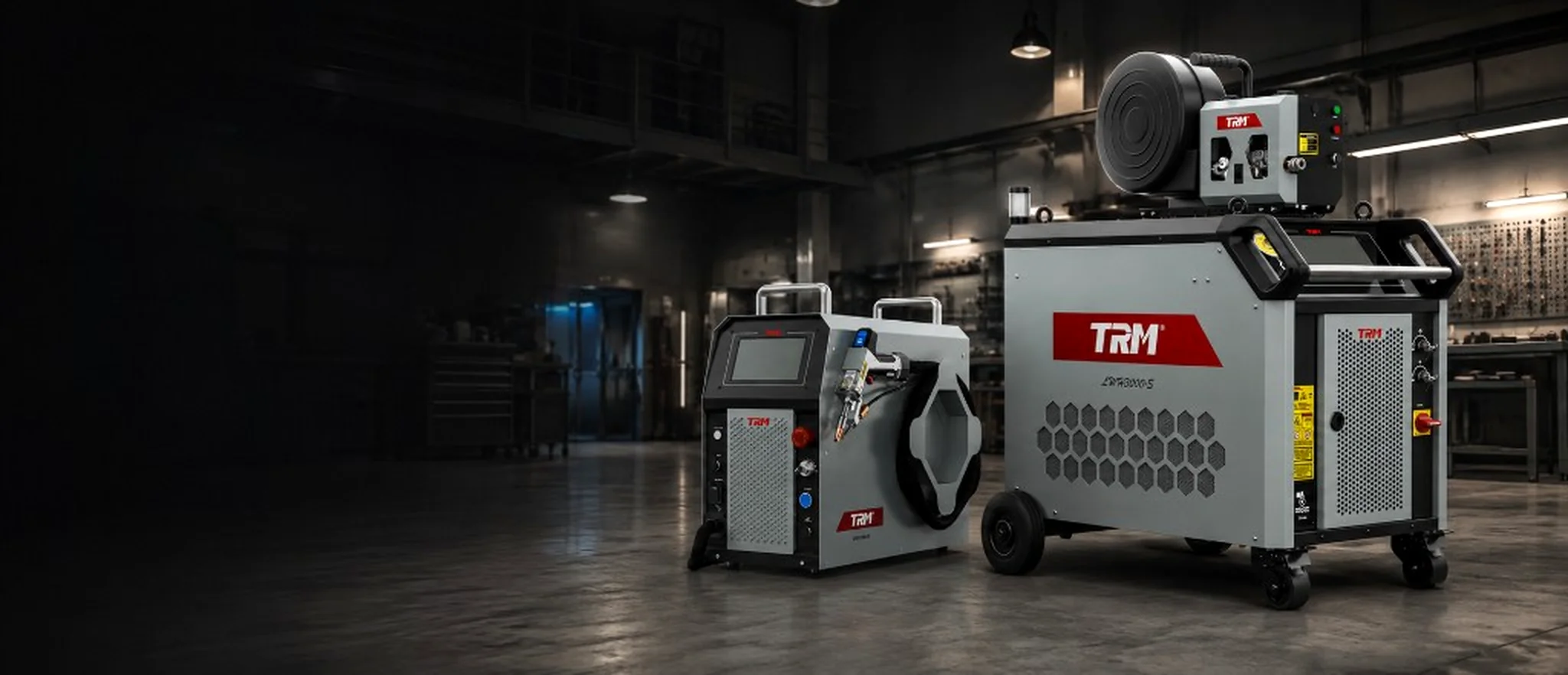
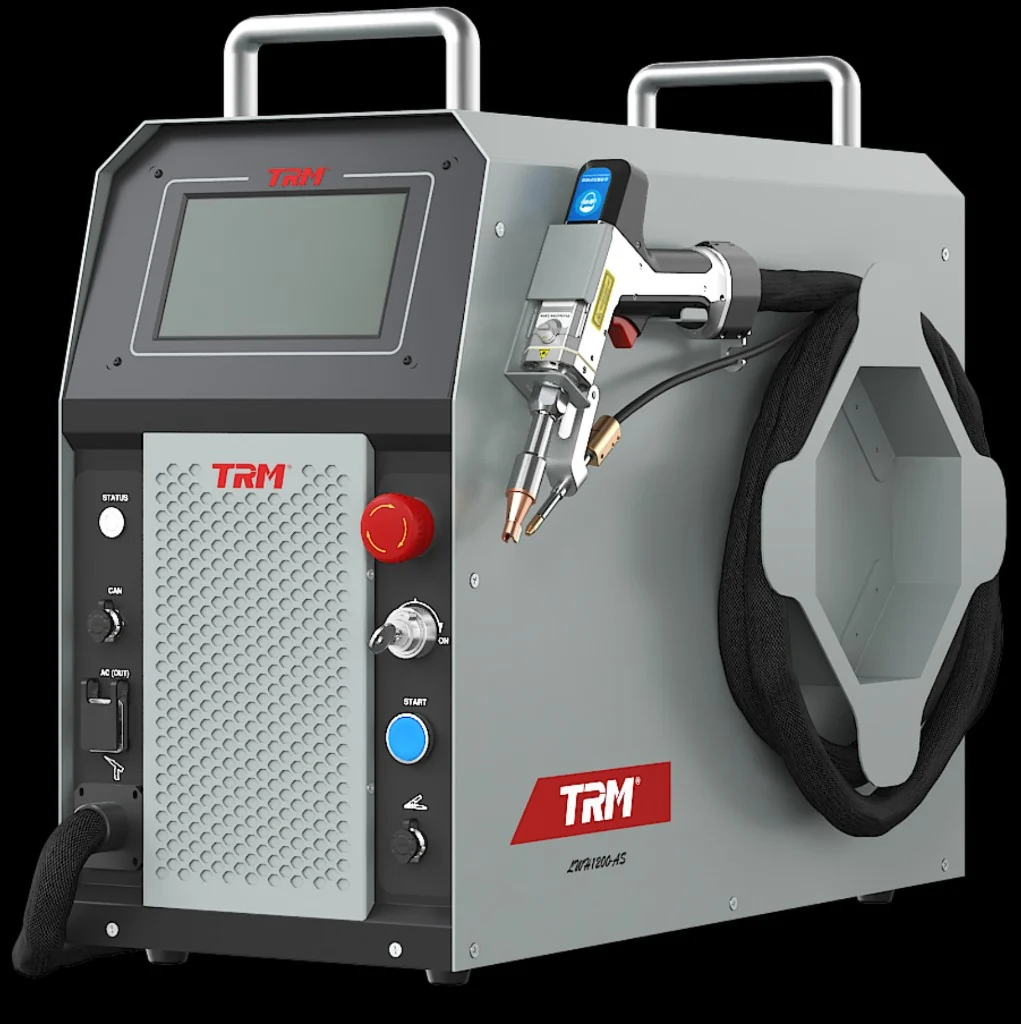
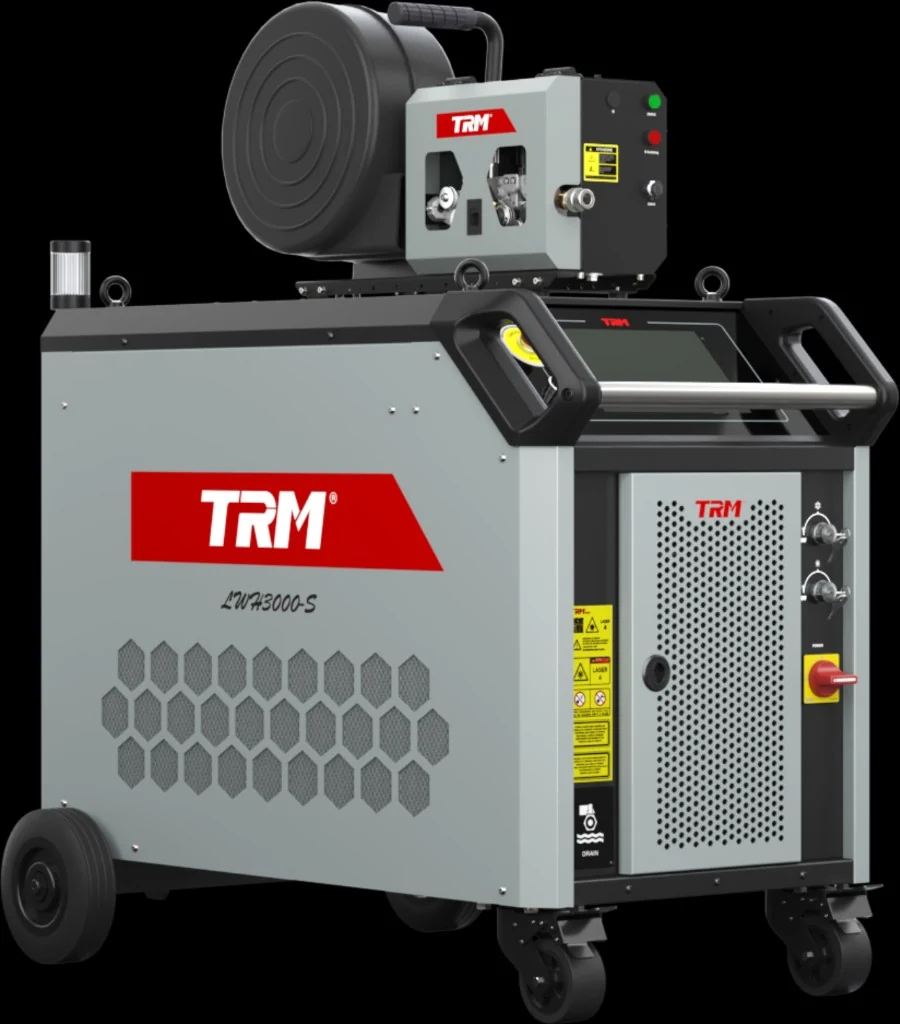
Mantech’s current strategic range is the TRM G3 fibre laser welder range: the compact air-cooled LWH1200-AS and three water-cooled S models from 1.5kW to 3kW.
Start with the joints you actually weld
Bring drawings, samples or photographs of regular work into the buying conversation. Record the material grade, normal thickness, joint type, gap consistency, access around the seam and the finish expected after welding. A machine demonstration is far more useful when it uses a representative part rather than a prepared test coupon that bears little relation to production.
Handheld laser welding rewards clean material and controlled fit-up. If gaps vary widely, surfaces arrive heavily contaminated or the operator cannot hold a stable travel path, more power will not solve the underlying process. Joint preparation, shielding gas and operator technique still decide whether the finished seam is acceptable.
If you are still deciding where laser welding fits within the wider factory, browse the Mantech applications hub. For a cut-to-weld workflow, compare the separate fibre laser cutting range as well.
Air-cooled or water-cooled?
Air cooling makes sense when portability and a compact footprint matter. The 1.2kW LWH1200-AS weighs 41 kg and uses a 5 m laser fibre, so it can suit mobile bays, repair work and light-gauge fabrication where the machine needs to move between jobs.
Water cooling is the better starting point when the welder will run for longer periods or the work regularly moves into thicker material. The LWH1500-S, LWH2000-S and LWH3000-S share a larger water-cooled format with a 10m fibre. They are production machines rather than portable units, so floor position, electrical supply and service access should be planned before ordering.
Do not reduce this choice to “air-cooled is basic” and “water-cooled is better”. A compact air-cooled machine can be the more useful tool for light work spread across several bays. Water cooling earns its place when sustained duty and the everyday material range justify the larger installation.
Choose power from everyday thickness and duty
TRM’s suggested workpiece ranges are a comparison aid, not a guaranteed weld limit. Joint design, material grade, fit-up, travel speed, shielding gas and the required weld profile all affect the result. Use the figures to form a shortlist, then prove the process on your own work.
| Model | Cooling and power | Suggested range | Where it usually fits |
|---|---|---|---|
| LWH1200-AS | Air-cooled · 1.2kW | 0.4–4 mm | Mobile bays, repair work and regular light-gauge fabrication |
| LWH1500-S | Water-cooled · 1.5kW | 0.4–4 mm | Everyday workshop production where longer duty matters |
| LWH2000-S | Water-cooled · 2kW | 0.4–6 mm | Broader material mix, thicker regular work and longer shifts |
| LWH3000-S | Water-cooled · 3kW | 0.4–8 mm | Demanding fabrication where the application genuinely needs the extra output |
A workshop mainly joining 1–3 mm stainless assemblies may gain little from specifying 3kW purely for headroom. Conversely, a team that regularly reaches 5–6 mm and expects long production runs should not choose a compact platform simply because it is easier to position. Match the machine to the centre of the workload, then check the occasional extremes separately.
Check wire feeding, controls and operator workflow
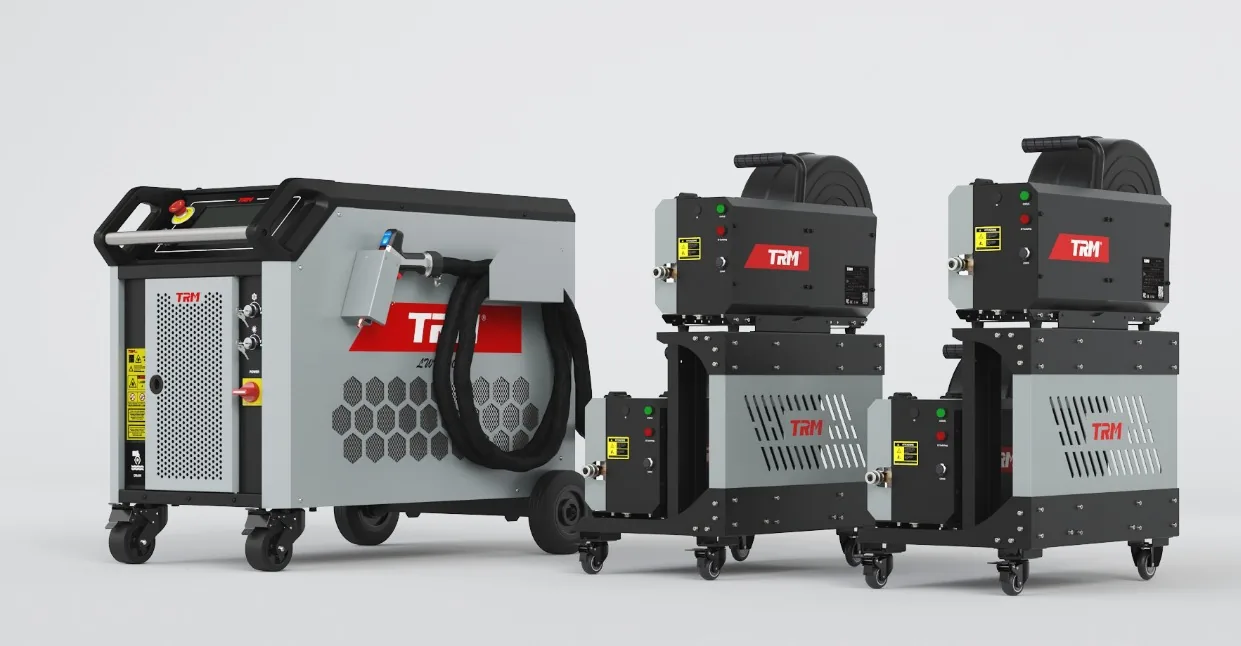
Every TRM G3 includes a single wire feeder as standard. That matters when filler wire is part of the approved process, but it does not mean every joint should use wire. Whether filler is needed depends on the joint, fit-up, material and required result. A multi-wire feeder is an optional upgrade and should only be added when the work calls for it.
TRM control offers Easy Mode and Expert Mode with more than 110 built-in presets and USB-upgradeable databases. Presets are a practical starting point, especially for a team moving into laser welding, but they do not remove the need for trials and operator training. The useful question is whether your operators can select, prove and repeat an approved setup without guessing.
Plan shielding gas and workshop services
TRM specifies customer-supplied argon or nitrogen for shielding. The correct gas depends on the metal and process, so confirm it during application review rather than treating gas as an afterthought. The electrical requirement also changes by model: use the approved specification supplied for the exact machine, not a generic figure copied from another welder.
Think about where the machine, feeder, gas and parts will sit; how the operator will move around the job; and whether the torch and fibre can reach safely without tight bends or trip hazards. For UK and Irish sites, delivery, siting, installation and training should be agreed in the quotation rather than assumed.
Class 4 safety is part of the machine choice
A handheld fibre laser welder is Class 4 equipment. The buying decision therefore includes the controlled welding area, suitable enclosure or cabin, interlocks, laser-rated viewing protection, PPE, fume extraction, procedures and training. A conventional welding screen and standard helmet are not a complete laser-safety system.
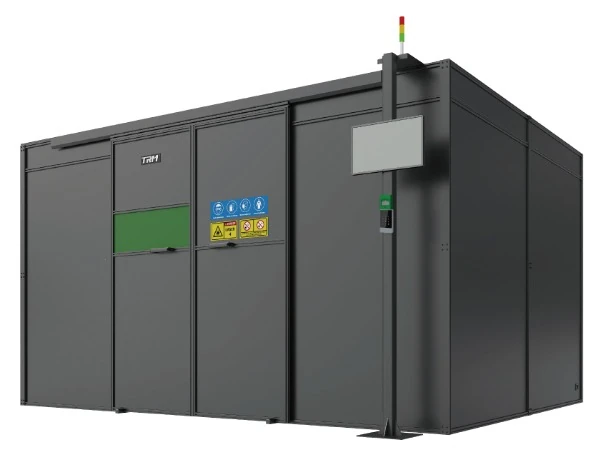
The final arrangement must be assessed for the site and the work. TRM can be supplied with laser protection cabins, helmets and eyewear, but those items still need to be specified as part of a competent risk assessment. Do not order the welder first and leave the safety cell until delivery week.
Read the open fibre laser safety guide for the wider beam and reflection risks. It provides planning context, not a substitute for a site-specific assessment.
What to send before asking for a quotation
- Drawings or clear photographs of representative joints.
- Material grades and the thicknesses welded most often.
- Joint type, normal fit-up and whether filler wire is currently used.
- Expected welding hours, batch sizes and shift pattern.
- Required finish and any inspection or procedure requirements.
- Workshop power, gas arrangements and proposed machine position.
- Details of the planned Class 4 enclosure, extraction and operator controls.
- Parts for a meaningful welding trial.
This information gives an application specialist something concrete to work from. It also makes quotations easier to compare because the machine, safety provision, wire feeding, delivery and training can be discussed against the same job rather than as separate extras.
Choose the TRM platform with your own work
The right TRM G3 is the smallest platform that handles your regular work with the required duty, process control and sensible headroom. For mobile light-gauge jobs that may be the LWH1200-AS. For sustained workshop production, the water-cooled 1.5kW, 2kW or 3kW machines provide the clearer route.
Explore the TRM fibre laser welder range, then request advice with representative parts and your expected workload. Call the UK team on 0121 541 1444 or Mantech Ireland on (+353) 83 804 8820.
Useful next reads
- TRM fibre laser welders
Compare the four G3 models, full specifications, included wire feeder and safety options.
- Open fibre laser safety risks
Understand direct and reflected beam risk before planning a handheld welding cell.
- Mantech machinery applications
Place laser welding within the wider cutting, forming and fabrication workflow.
- Fibre laser cutting machines
Compare Vector and Titan when your production route starts with laser-cut sheet parts.
- Mantech machinery installations
See wider evidence of Mantech delivery, commissioning and support without implying a TRM installation.
Frequently asked questions
Should I choose an air-cooled or water-cooled fibre laser welder?
Choose air cooling when portability, a compact footprint and regular light-gauge work are the priority. Choose a water-cooled TRM S model for longer production duty and a broader thickness range. The right answer depends on working hours and parts, not cooling type alone.
What power fibre laser welder do I need?
Start with your everyday material, thickness, joint and shift pattern. TRM suggests 0.4–4 mm for the 1.2kW and 1.5kW models, 0.4–6 mm for 2kW and 0.4–8 mm for 3kW. These are selection guides rather than guaranteed limits, so prove representative work before ordering.
Is the 3kW TRM the best model?
Not automatically. The 3kW LWH3000-S suits demanding work that needs its output, but it can be unnecessary for a workshop mainly joining light-gauge assemblies. Choose the platform around normal production, then allow sensible headroom.
Does a TRM fibre laser welder include a wire feeder?
Yes. Every TRM G3 model includes a single wire feeder as standard. A multi-wire feeder is optional. Whether filler wire is needed on a particular job depends on joint design, fit-up, material and the approved process.
Does Mantech install and train operators?
Collection is the standard route for TRM G3 welders. Delivery, siting, installation and operator training are quoted when required, with the exact scope agreed for the site. Mantech supports UK customers and Mantech Ireland handles Irish enquiries and site planning.