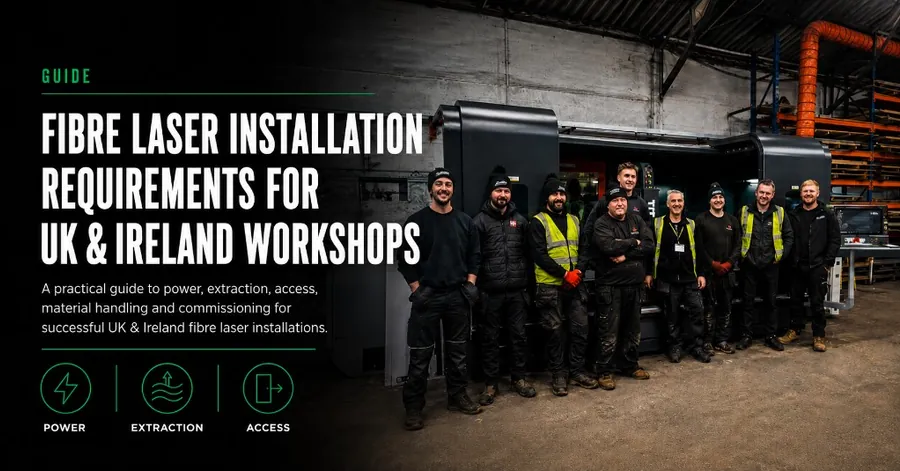
Installing a fibre laser involves more than finding enough room for the machine itself. Electrical supply, extraction, assist gas, access, material handling and operator training all need to be considered before delivery.
Getting these details right early makes the installation considerably easier and helps ensure the machine can be commissioned and put into production without unnecessary delays.
At Mantech, we support customers in the UK and Ireland through the process from choosing the correct machine and configuration through to delivery, installation, commissioning and operator training.
If you are still deciding which machine best suits your workshop, start with our fibre laser cutter range or read our fibre laser buyer’s guide.
Plan the workshop alongside the machine. Compare formats on the fibre laser hub, size extraction on the Kemper extraction hub, and read the safety guide for enclosure and interlocks.
Match the bay to a current machine in the fibre laser cutter range. Size filtration on the Kemper extraction hub. Check enclosure and interlocks in the fibre laser safety guide. Plan bottles or a compressor with the assist-gas guide.
What should be planned before a fibre laser is delivered?
The exact requirements depend on the machine, laser power and how it will be used, but there are several areas that should always be considered:
- Available workshop space
- Delivery and access into the building
- Electrical supply
- Fume extraction
- Assist gas or compressed air
- Material loading and storage
- Space for the chiller and ancillary equipment
- Operator access
- Future servicing and maintenance access
These are best considered as one installation rather than as separate items.
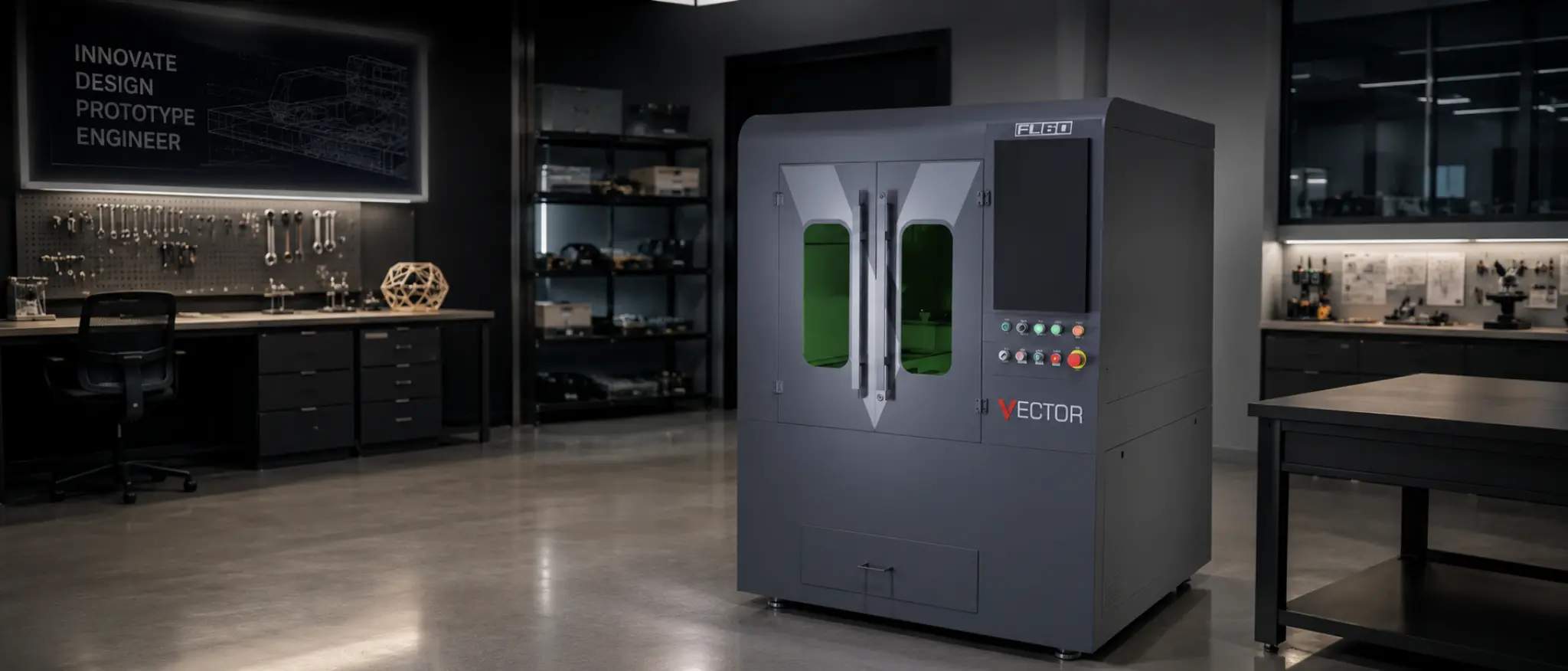
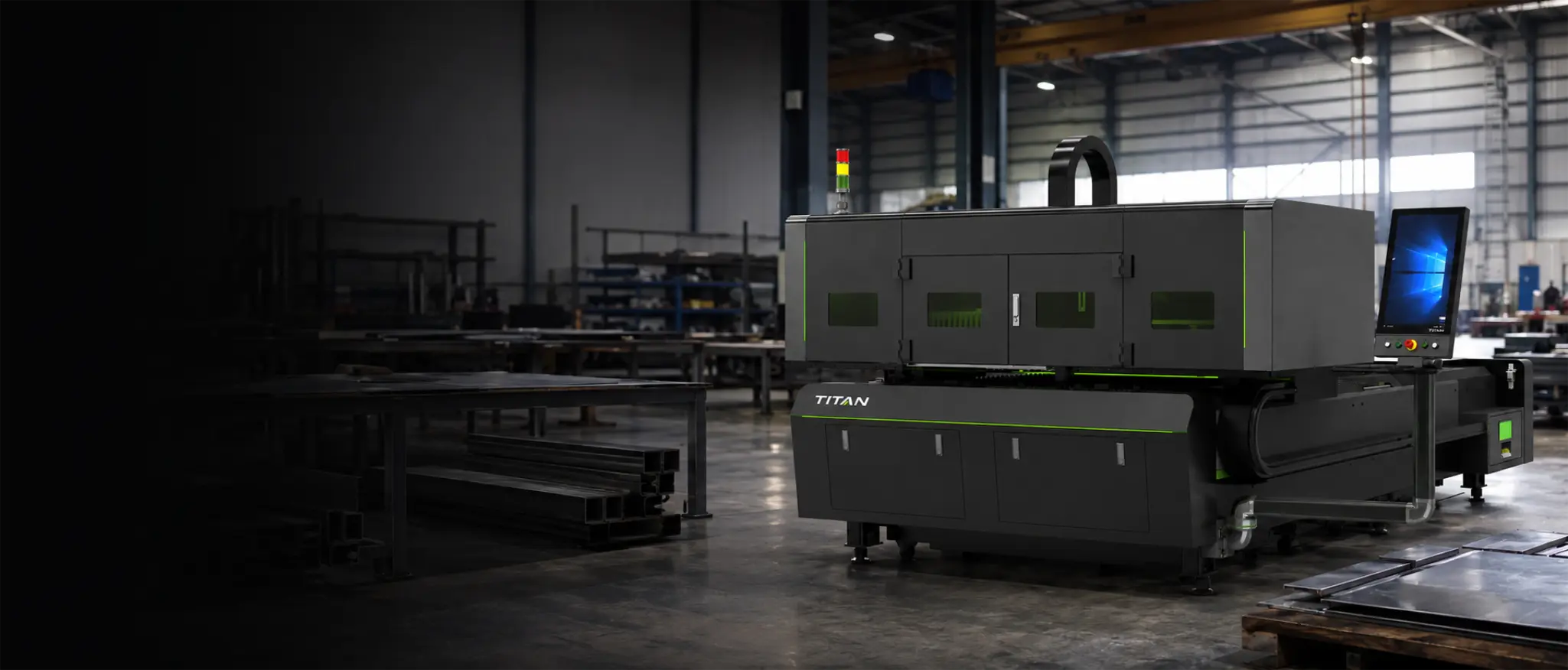
A compact Vector FL60, for example, has very different site requirements from a full-format Vector FL300 or larger Titan production system.
Allow enough space for the complete fibre laser installation
The quoted cutting area or bed size does not represent the total space the machine will require.
You also need to consider the physical machine enclosure, control area, chiller, extraction equipment, ducting, gas supply or compressor and sufficient access around the machine.
Material handling can require just as much thought.
If you regularly cut full sheets, consider where incoming material will be stored, how it will be moved to the machine and where completed parts and skeletons will go after cutting.
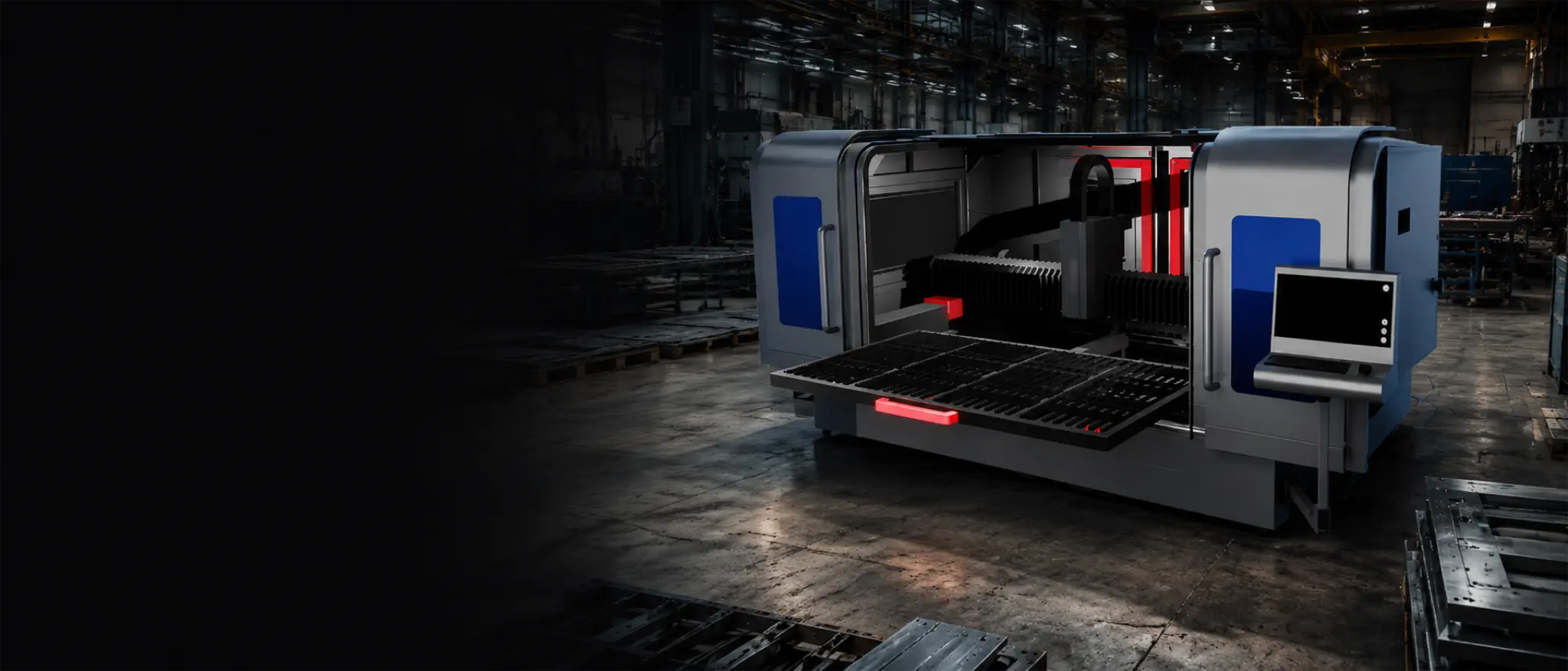
For machines fitted with shuttle tables, additional space may also be required for table movement and loading.
Think about the complete workflow
A sensible workshop layout should allow operators to:
- Bring material to the machine safely
- Load and unload sheets efficiently
- Access the control station
- Remove finished parts and scrap
- Reach consumables and frequently serviced areas
- Access the machine for maintenance and engineering support
Planning these areas before installation can make a significant difference to everyday productivity once the machine is running.
You can see examples of machines installed in working manufacturing environments on our fibre laser installations pages.
Check the delivery route as well as the machine position
It is easy to concentrate on the final position of the machine and overlook how it will actually get there.
Before delivery, check the route from the delivery vehicle to the installation area.
Important considerations include:
- Yard and vehicle access
- Door and roller-shutter dimensions
- Internal doorway widths
- Floor condition
- Changes in floor level
- Tight corners or restricted areas
- Suitable lifting or handling equipment
Larger fibre laser systems are substantial pieces of industrial equipment, so any access restrictions should be identified before delivery arrangements are finalised.
Where necessary, Mantech can discuss the proposed position and access requirements with you in advance.
Fibre laser electrical requirements
Electrical requirements vary considerably between machines and laser powers.
For this reason, you should never size an electrical supply using a generic figure found online. The correct supply should be based on the specification of the machine you are actually purchasing.
Mantech will provide the relevant electrical requirements for the chosen configuration so that your electrician can prepare the supply correctly.
Single-phase fibre lasers
Some of the compact Vector fibre laser range can be configured for workshops where three-phase power is not available.
The Vector FL60 is available in 1.5 kW and 2 kW single-phase configurations, alongside three-phase options from 1.5 kW to 3 kW.
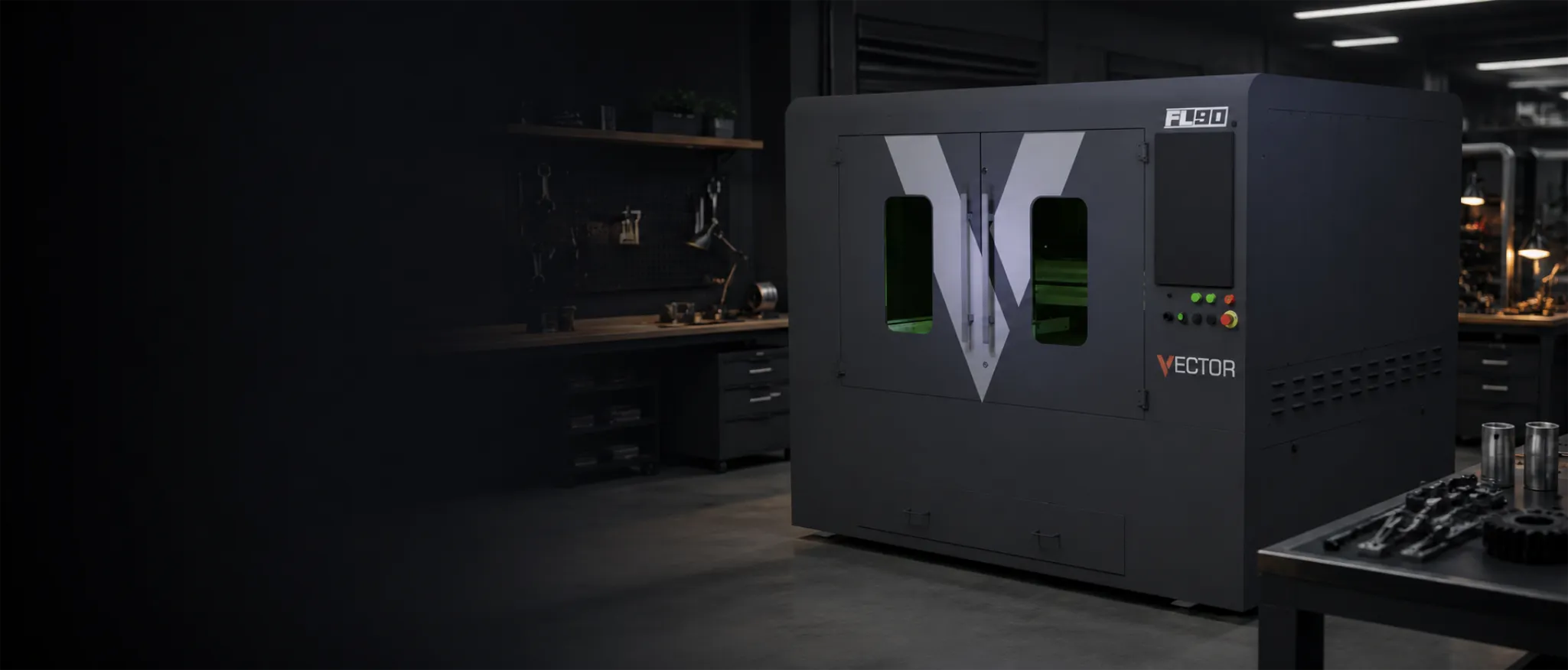
The FL90 and FL130 ranges also provide selected single-phase configurations up to 2 kW, depending on specification.
This can make compact fibre laser cutting practical for smaller workshops, educational facilities and businesses bringing metal cutting in-house for the first time.
However, the electrical supply should never be considered independently from the work you intend to produce. Material type, thickness, production volume and required cutting speed should determine the laser power first.
Three-phase fibre lasers
Larger and higher-powered systems generally require an industrial three-phase supply.
The Vector FL250 and FL300, for example, use a three-phase AC 380 V 50 Hz supply.
Titan production fibre laser systems are also based around industrial three-phase electrical supplies, with the exact requirement depending on the model, laser power and installed equipment.
Always use the electrical specification supplied with your quotation rather than estimating requirements from another machine.
Fibre laser extraction requirements
Fume extraction is an essential part of a production fibre laser installation.
During cutting, metal is heated and vaporised, producing fumes and particulate that need to be removed from the cutting area and appropriately filtered.
The extraction system therefore needs to be matched to the machine rather than treated as a generic workshop extractor.
Important factors include:
- Laser power
- Machine enclosure and extraction zones
- Materials being processed
- Expected production hours
- Duct length and layout
- Filter capacity and maintenance requirements
Mantech supplies and supports extraction solutions for its fibre laser installations, including systems from Kemper.
The appropriate extraction system should be selected alongside the laser so that the machine, extractor and ducting can be planned as a complete installation.
You can find more information on our Kemper fibre laser extraction page.
Plan the extraction ducting before installation
The extractor itself is only part of the system.
The route between the fibre laser and extraction unit also needs to be considered.
Long or unnecessarily complicated duct runs can affect extraction performance, while a poorly positioned extractor may make maintenance more difficult.
Ideally, the location of both the fibre laser and extraction system should be decided together.
Allow suitable access for filter changes and routine maintenance once the machine is in production.
Assist gas requirements
Fibre laser cutting commonly uses one of three assist-gas options:
- Nitrogen
- Oxygen
- Clean, dry compressed air
The correct option depends on the material, required edge quality, thickness and production priorities.
For many businesses, more than one assist gas will be used depending on the job.
Nitrogen
Nitrogen is widely used where a clean, oxide-free cut edge is required, particularly when processing stainless steel and aluminium.
Depending on consumption, nitrogen may be supplied through cylinders, cylinder packs, bulk storage or other suitable supply arrangements.
Oxygen
Oxygen is commonly used when cutting carbon or mild steel and can assist the cutting reaction, particularly on thicker material.
The correct pressure, purity and cutting parameters remain important for achieving consistent results.
Compressed air
Compressed air can provide an economical cutting option for suitable materials and applications, but it needs to be produced to the correct standard.
A general workshop compressor should not automatically be assumed suitable.
Fibre laser air cutting requires a stable supply of clean, dry and appropriately filtered compressed air. Moisture, oil and contamination within the airline can affect cutting quality and potentially cause problems within the cutting system.
Mantech can supply dedicated fibre laser compressor packages such as the Denair DAV22-15.5-TI compressor.
Our fibre laser assist-gas guide explains the differences between nitrogen, oxygen and compressed air in more detail.
Remember the chiller and ancillary equipment
The laser source and cutting system require temperature-controlled cooling, so an industrial chiller forms part of the overall installation.
Depending on the machine configuration, there may also be:
- Extraction equipment
- Air compressor
- Gas supply equipment
- Voltage or electrical equipment
- Sheet handling equipment
- Material storage
- Scrap containers
These items need suitable positions around the machine without restricting operator or service access.
When comparing fibre lasers, looking at the machine footprint alone can therefore give a misleading impression of the space actually required.
Material loading and handling
The larger the cutting format, the more important material handling becomes.
A compact machine processing smaller blanks may need relatively little additional equipment. A 3000 × 1500 mm production machine processing full sheets is a different proposition.
Consider how material will arrive at the machine.
Depending on the installation, this could involve:
- Forklifts
- Overhead cranes
- Vacuum lifters
- Sheet-loading equipment
- Palletised material
- Manual handling for smaller formats
There should also be somewhere practical for finished parts, offcuts and skeletons to go after cutting.
Efficient loading and unloading reduces unnecessary machine downtime and can have a significant effect on overall production output.
Fibre laser safety and enclosure
Production fibre laser cutters use high-powered laser sources and need appropriate safety systems.
Mantech’s Vector production fibre lasers are supplied as enclosed systems with safety interlocks and laser-rated viewing panels. Titan configurations also incorporate appropriate enclosure and safety arrangements according to the particular platform.
Machine safety, however, is only one part of workshop safety.
Businesses should also consider:
- Operator training
- Risk assessments
- Controlled access where required
- Material handling
- Gas storage and handling
- Extraction
- PPE appropriate to surrounding tasks
- Workplace procedures
Your own health and safety responsibilities continue to apply after the machine has been installed and commissioned.
For a more detailed look at this subject, read our fibre laser safety guide.
We also explain some of the additional considerations surrounding open and uncovered fibre laser systems.
What does Mantech provide during installation?
Mantech supplies fibre laser systems as supported production equipment rather than simply delivering a machine to your door.
The exact installation package is confirmed on your quotation, but current Vector and Titan systems include delivery, installation, commissioning and operator training as part of the package. Irish workshops are planned and installed by Mantech Ireland.
Depending on the machine, our engineers will carry out the relevant installation and commissioning procedures before training your operators.
This can include:
- Machine positioning and setup
- Levelling and alignment where applicable
- System commissioning
- Checks of machine operation
- Connection and commissioning of agreed ancillary equipment
- Control-system training
- CAM and nesting workflow training
- Basic machine operation
- Routine operator maintenance
- Consumables and cutting-head guidance
- Safe day-to-day operation
Training is matched to the machine and control system being supplied.
Vector FL60, FL90 and FL130 machines use Mantech’s UK-designed V-CUT machine control together with V-CAM programming and nesting software.
Vector FL250 and FL300 systems use CypCut, while Titan systems use specialist FSCUT/CypCut-based controls and software according to the machine configuration.
Installation is only the beginning
Support becomes especially important once the machine enters everyday production.
Operators will inevitably encounter new materials, different thicknesses, unfamiliar jobs and questions that did not arise during initial training.
After installation, customers can reach Mantech’s engineers in the UK or Mantech Ireland, alongside a 24-month warranty on the machine supplied.
Our aim is not simply to commission the machine and leave. We support customers as the equipment becomes part of their normal manufacturing process.
You can find more information about our engineering and after-sales facilities in the Mantech support centre.
Fibre laser installation checklist
Before your delivery date approaches, it is worth confirming the following.
Workshop
- Machine position agreed
- Sufficient working space around the machine
- Material storage position considered
- Loading and unloading route planned
- Service access maintained
Delivery
- External access checked
- Door and shutter sizes confirmed
- Internal route checked
- Required lifting or handling equipment arranged
Electrical
- Machine electrical specification supplied to your electrician
- Correct supply installed
- Suitable isolation provided
- Supply ready before commissioning
Extraction
- Correct extraction system selected
- Extractor position agreed
- Duct route planned
- Maintenance access available
Assist gas
- Nitrogen, oxygen or compressed-air requirements agreed
- Cylinders, packs or compressor positioned
- Pipe routes prepared where required
- Correct pressure and gas specification confirmed
Operators
- Operators available for training
- Appropriate workshop procedures in place
- Responsibility for routine maintenance agreed
Confirming these items before delivery gives the engineering team the best opportunity to complete the installation and commissioning efficiently.
Planning your fibre laser installation with Mantech
If you are considering a fibre laser for a workshop in the UK or Ireland, it is worth discussing the site at the same time as the machine.
Providing information such as a floor plan, photographs of the proposed installation area, access dimensions and details of the materials you intend to cut can help identify potential issues early.
We can then advise on the machine format, laser power, extraction, assist gas and supporting equipment required for the application.
Explore our fibre laser cutter range or speak directly with the Mantech team.
UK: 0121 541 1444 · Ireland: (+353) 83 804 8820
Delivery, installation, commissioning, training and the exact equipment included should always be confirmed on your individual quotation.
Continue your research
- How to Choose a Fibre Laser Cutter: UK Buyer’s Guide
Compare cutting formats, laser powers, machine types and the factors worth considering before investing.
- Fibre Laser Safety: What to Look Out For
A closer look at enclosure, interlocks, operator protection, extraction and workshop considerations.
- Kemper Fibre Laser Extraction
Explore extraction systems for fibre laser cutting and how the correct system is matched to the application.
- Fibre Laser Assist Gas Guide
Compare nitrogen, oxygen and compressed air for fibre laser cutting.
- How Much Does a Fibre Laser Cutter Cost in the UK?
Understand the wider investment, including the machine, extraction, gas, electrical preparation and supporting equipment.
- Mantech Installations
See examples of Mantech machinery supplied and installed in working UK and Irish businesses.
Frequently asked questions
What electrical supply does a fibre laser need?
It depends on the machine and laser power. Compact Vector models are available in selected single-phase configurations, while larger and higher-powered systems generally require an industrial three-phase supply. The exact electrical requirement should always be taken from the specification supplied with your chosen machine.
Can I run a fibre laser from single-phase power?
Selected Vector FL60, FL90 and FL130 configurations are available with single-phase power up to 2 kW. Whether this is suitable depends on the materials, thicknesses and level of production you require. Higher-powered systems generally require three-phase power.
Does a fibre laser need fume extraction?
Yes. Fibre laser cutting produces metal fumes and particulate that need to be extracted from the cutting area and appropriately filtered. The extraction system should be matched to the machine, laser power, materials and expected workload.
Can I use compressed air instead of nitrogen?
For suitable materials and applications, clean and dry compressed air can be used as an assist gas. However, the compressor, dryer and filtration system need to provide air at the required pressure and quality. A normal workshop airline should not automatically be assumed suitable.
How much space should I allow around a fibre laser?
Allow considerably more than the quoted cutting area. The installation may also include the machine enclosure, control station, chiller, extractor, ducting, gas or compressor equipment and material handling areas. Shuttle-table systems can require additional loading and table-movement space.
Does Mantech install and train operators?
Current Vector and Titan fibre laser packages include delivery, installation, commissioning and operator training, with the exact scope confirmed on the quotation. Training is based on the control and software supplied with the particular machine. Irish workshops are planned and installed by Mantech Ireland.
What information should I provide before ordering?
A floor plan or basic measurements of the proposed area are useful, together with photographs of the workshop and delivery route. You should also provide details of the material types, common thicknesses, sheet sizes and expected workload so the complete installation can be specified correctly.