Assist gas is often left until late in a fibre laser specification. That is a mistake. The choice between nitrogen, oxygen and compressed air affects the cut edge, the work needed after cutting and the running cost of every job. A sensible decision starts with the material, thickness and finish you produce most often — not with a blanket rule that one gas is always best.
Start with the parts you cut most often: material, thickness, finish and batch length. The job cost estimator helps put realistic gas use into a quote. If compressed air is one of the options, the Denair compressor guide explains what a dedicated clean, dry air supply involves.
The short answer
- Oxygen is principally used for mild steel. It supports the cutting reaction, but it leaves an oxidised edge.
- Nitrogen is used where a clean, oxide-free edge matters, particularly on stainless steel and aluminium.
- For general fabrication, Mantech recommends assessing compressed air first on sheet around 3–5 mm; above that, nitrogen or oxygen is usually the safer starting point for cut quality.
- The final choice depends on the machine, material grade, thickness, nozzle, pressure and what happens to the part after cutting.
If you are still choosing the machine itself, compare the current Vector and Titan fibre laser range first. The power guide covers kW and thickness; this guide deals with the gas decision.
What assist gas actually does
The laser supplies the energy that melts the material. Gas flows through the nozzle around the beam and removes that molten material from the kerf. The gas can also change the chemistry of the cut.
Nitrogen is inert: it pushes the melt out without reacting with it and shields the edge from the surrounding air. Oxygen does the opposite. It reacts with heated mild steel and adds energy to the process, which is useful for flame cutting but produces an oxide layer. Compressed air is mostly nitrogen with roughly one-fifth oxygen, so it is neither a pure inert gas nor pure oxygen. Its results sit between the two and depend heavily on the application.
For a broader explanation of the process, read the fibre laser cutting guide. The cut parameter tool also gives a useful starting point for material and thickness settings on Vector machines.
Nitrogen vs oxygen vs compressed air — at a glance
| Factor | Nitrogen (N₂) | Oxygen (O₂) | Compressed air |
|---|---|---|---|
| Common use | Stainless steel, aluminium and clean mild-steel edges | Mild steel flame cutting | Selected mild steel, aluminium and coated-sheet work |
| Edge character | Oxide-free when the process is set correctly | Oxidised; removal may be needed before painting or powder coating | Some oxidation is possible because air contains oxygen |
| How it cuts | High-pressure gas physically removes the melt | The oxygen reaction adds heat to the cut | High-pressure mixed gas removes the melt |
| Typical supply | Cylinders, packs, bulk supply or on-site generation | Cylinders, packs or bulk | Correctly sized compressor, dryer and filtration |
| Commercial point | Gas use can become significant on high-volume work | Often economical for appropriate mild-steel jobs | Can reduce bought-in gas use, but requires suitable plant |
| What to verify | Purity, pressure and flow through the full nest | Edge oxidation and downstream finishing | Pressure, flow, dryness, filtration and machine approval |
Material by material: how UK shops usually choose
Mild steel
Mild steel offers the widest choice. Oxygen is the established gas for flame cutting and is commonly used where its reactive process suits the material and thickness. Nitrogen is the alternative when the job needs an oxide-free edge, although it requires the laser to provide all of the cutting energy. Compressed air may suit general fabrication work, but only after the edge and process stability have been proved on the actual machine.
Stainless steel
Nitrogen is the normal starting point for stainless steel because it protects the edge from oxidation. Compressed air can be used in some stainless applications, but the oxygen in the air changes the edge. Whether that is acceptable depends on the specification and any later welding, coating or cosmetic work.
Aluminium and coated sheet
Nitrogen is also well established for aluminium. Some fibre laser processes use compressed air successfully on aluminium and coated sheet, but alloy, coating, thickness and finish all matter. This is exactly the sort of decision that should be settled with representative sample cuts.
A practical thickness guide for compressed air
Mantech treats roughly 3–5 mm sheet as the practical range in which to assess compressed-air cutting first. Beyond about 5 mm, the process becomes more sensitive to power, pressure, nozzle and material, and the risk of dross or an inconsistent edge increases. Nitrogen or oxygen is normally the better starting point unless sample cutting proves that air meets the required finish. This is a production recommendation, not a universal machine limit: specialist high-pressure systems can cut thicker material with air.
Gas cannot be separated from laser power and material thickness. Use the power guide alongside the UK cost guide when building a shortlist.
Plan the gas supply around real production
Choosing the gas is only half the job. The supply must maintain the required pressure and flow for the whole programme. Cylinders may be practical at low usage; packs, bulk storage or on-site nitrogen generation may make more sense as demand grows. The right answer comes from expected consumption and production hours, not from the cheapest installation quote.
Air cutting also needs more than a convenient workshop airline. The compressor, dryer and filters must deliver the pressure, flow and air quality required by the laser manufacturer. Moisture, oil and unstable pressure can spoil the edge and increase wear on nozzles and optical components.
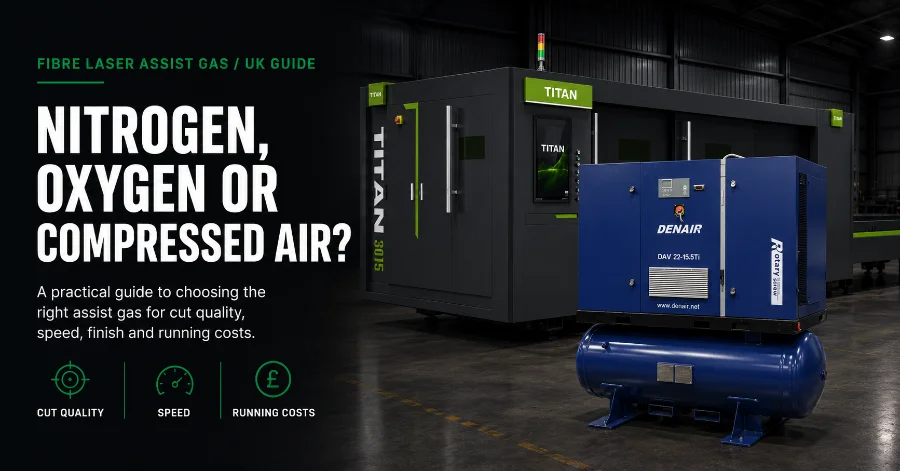
The Denair DAV22-15.5 Ti is Mantech’s dedicated compressor package for fibre laser applications, with integrated drying and filtration. It still needs to be sized against the machine and intended work.
Put assist gas into the job cost
There is no useful universal gas cost per hour. Consumption changes with gas type, pressure, nozzle, material, thickness, contour length and machine settings. Supplier rates and delivery arrangements vary too. A quote based on someone else’s headline figure is unlikely to survive contact with production.
- Cost nitrogen, oxygen and air jobs separately.
- Use representative programmes rather than a single straight-line cut.
- Include cylinder rental, delivery, bulk storage, generation or compressor costs where they apply.
- Review the figures when the material mix or number of shifts changes.
The fibre laser job cost estimator provides a consistent way to model individual work. Once the running assumptions are realistic, the ROI calculator can be used for the wider ownership case.
Nozzles, regulators and maintenance
A sound gas choice will not compensate for a damaged nozzle, poor alignment or unstable pressure. Nozzle condition and centring affect the gas flow through the kerf; regulators, gauges, filters and dryers need routine attention as well. If cut quality changes, check the complete gas path before changing parameters at random.
The fibre laser maintenance checklist covers the regular checks, and the nozzle-change video shows the practical process.
Assist gas does not replace extraction
The gas removes molten material from the kerf; it does not remove the resulting fume from the machine. The cell still needs correctly specified extraction, enclosure and interlocks. Cylinder storage, bulk tanks and compressor location should also be included in the site survey and risk assessment.
The fibre laser safety guide covers the wider cell, while the Kemper extraction range explains the filtration side of the installation.
How this fits a Vector or Titan specification
The current Vector and Titan ranges can be specified for oxygen, nitrogen and compressed-air assist where the machine configuration and application allow. Gas is only one part of that specification. Bed size, laser power, material mix and expected hours still decide which platform is appropriate.
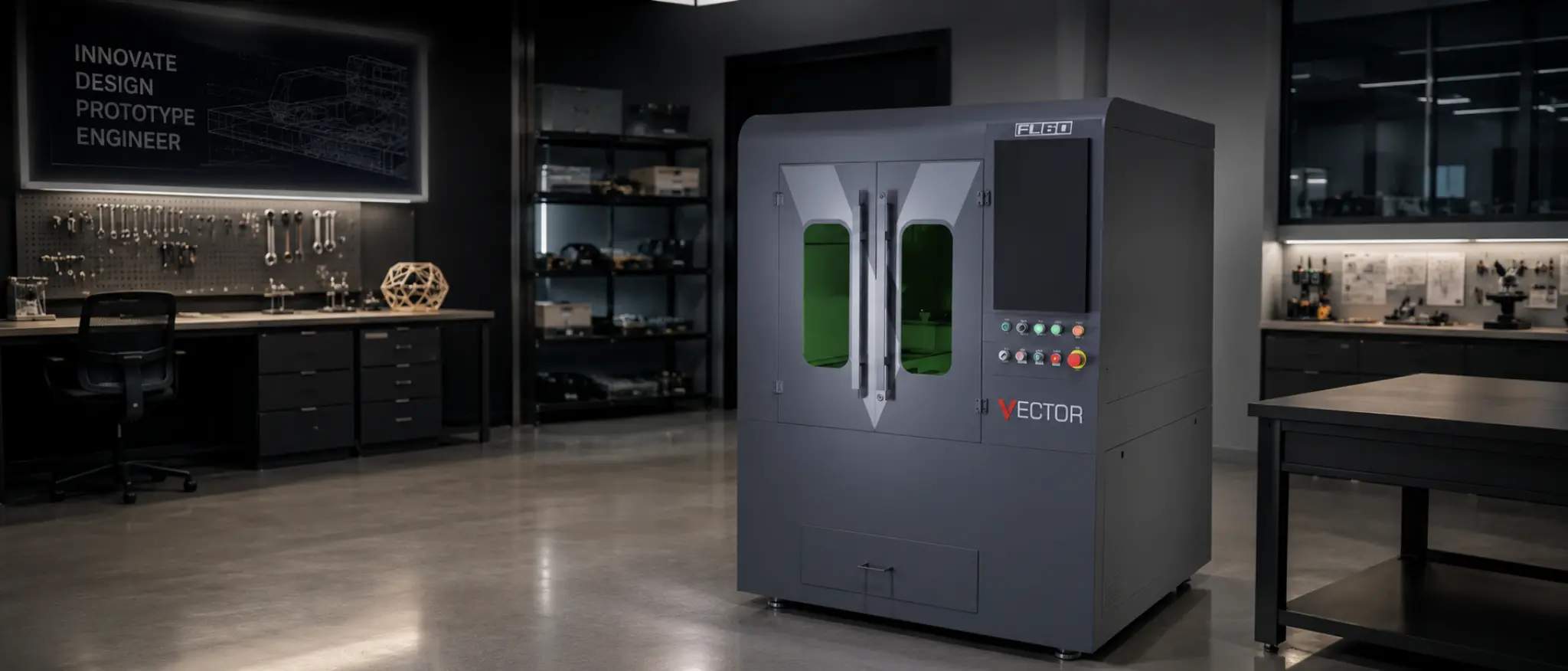
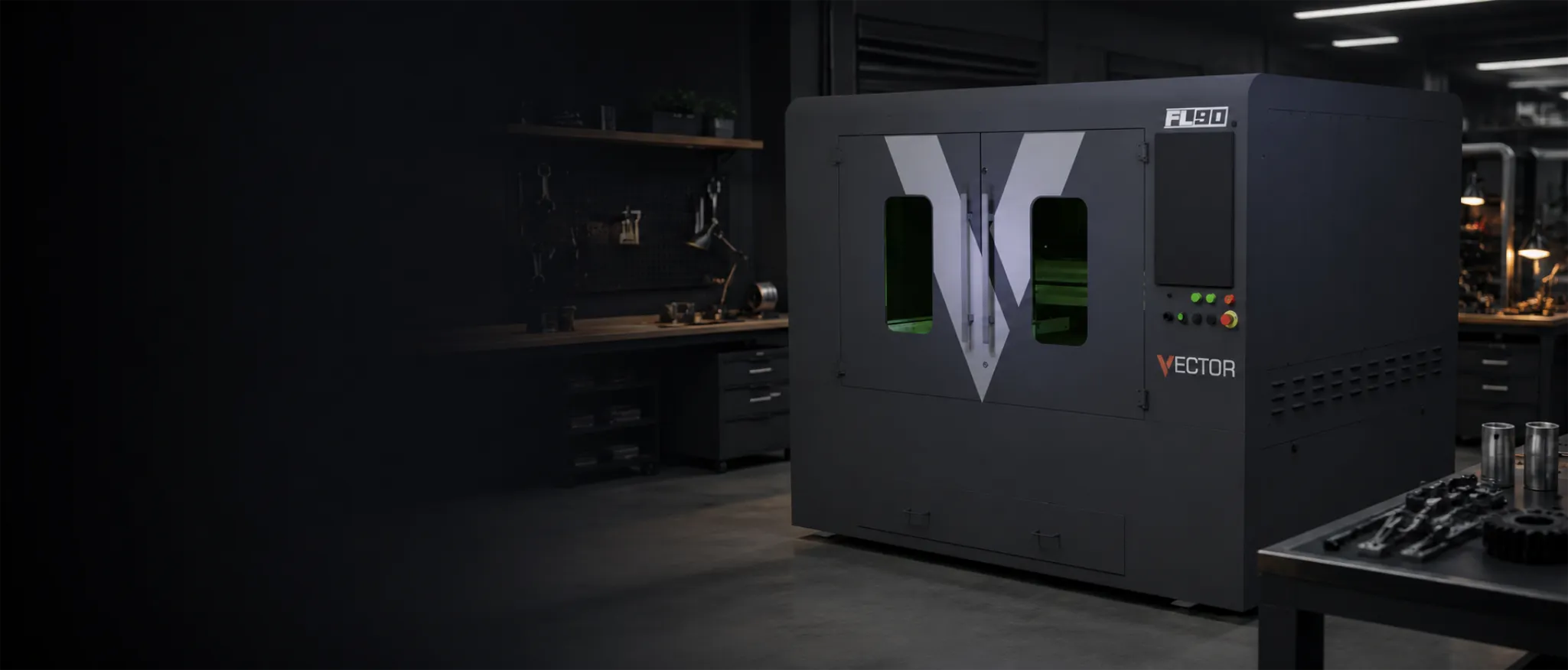
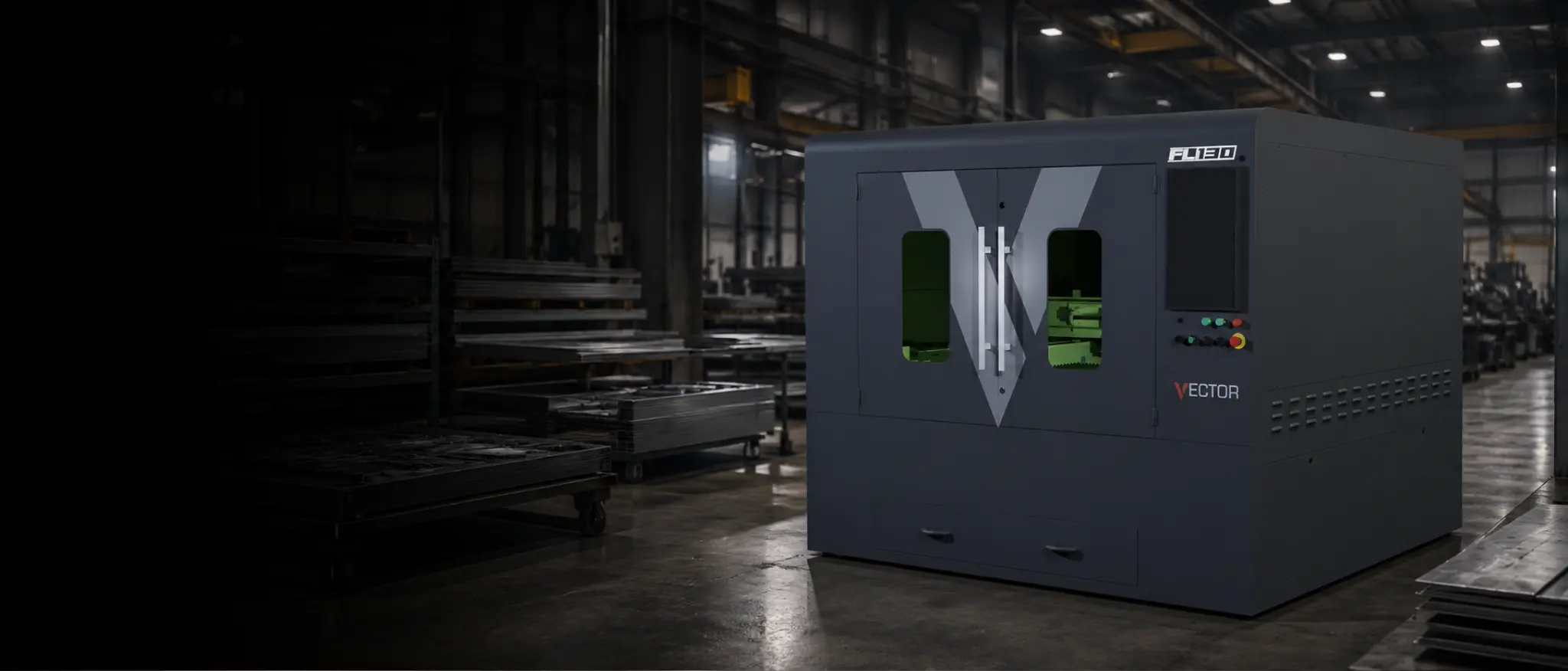
- Vector FL60, FL90 and FL130 cover compact and mid-format enclosed sheet cutting.
- Vector FL250 and FL300 provide larger Vector bed formats.
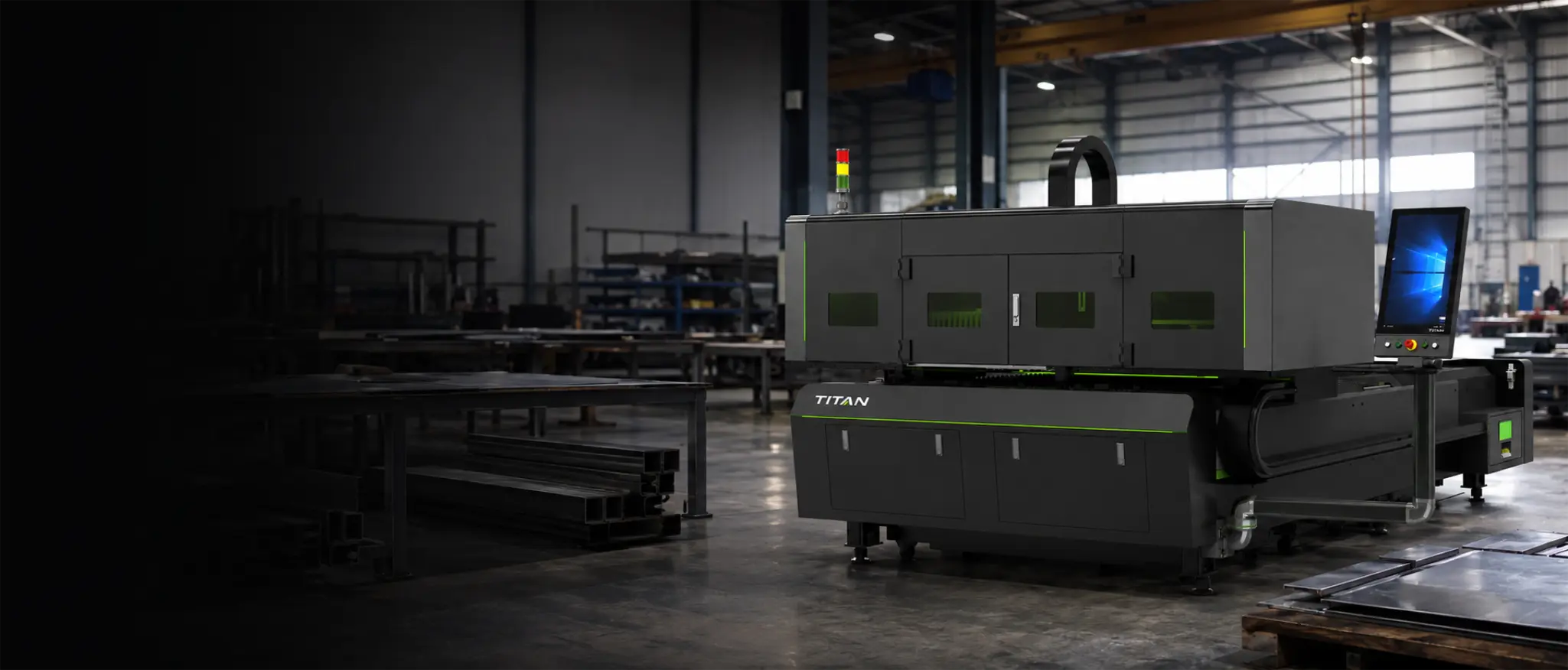
- Titan flatbeds cover 3000 × 1500 mm production formats and higher power options.
- Where compressed-air cutting is suitable, the compressor package is specified with the machine.
Compare Vector FL90, Vector FL130 and Titan N Series on the fibre laser hub.
Questions to settle before ordering
- Which materials and thicknesses account for most of the work?
- Which edges must be oxide-free before welding, painting or powder coating?
- How many production hours will each gas serve?
- Can the proposed supply maintain the required pressure and flow throughout a nest?
- What drying, filtration, storage and extraction equipment is needed?
- Have representative parts been cut from the customer’s own stock?
Discuss the application with Mantech
Mantech supplies Vector and Titan fibre laser cutters with UK installation, training and engineering support. Bring a representative set of drawings, materials and finish requirements to the discussion. That gives the applications team something concrete to test and prevents the gas supply being sized around an unrealistic demonstration cut.
Browse the fibre laser range, review the Denair compressor package, or call 0121 541 1444 to discuss the work.
Useful next reads
- What can you cut on a fibre laser?
Which metals fibre takes, and how thickness and gas sit together.
- Cutting stainless and aluminium on a fibre laser
Why nitrogen and a reflective head show up on those jobs.
- Fibre laser power guide
How laser power and everyday material thickness shape the machine choice.
- Fibre laser cost guide (UK)
Ownership context including assist gas as a running-cost line.
- Fibre laser job cost estimator
Build a repeatable job-cost model using your own operating figures.
- Fibre laser cutting guide
Process, materials and platform families around the gas decision.
Frequently asked questions
Should I cut mild steel with nitrogen, oxygen or air?
Oxygen is the established choice for reactive flame cutting of mild steel. Nitrogen is used when the job needs an oxide-free edge. Compressed air may be suitable for some mild-steel work, but the result depends on the machine, thickness, settings and required finish. Sample cutting is the reliable way to decide.
Can compressed air replace nitrogen on a fibre laser?
Not on every job. Air contains oxygen, so it does not provide the same inert, oxide-free process as pure nitrogen. It can reduce bought-in gas use on suitable work, provided the laser supports it and the compressor, dryer and filtration deliver the required pressure, flow and air quality.
Why is nitrogen commonly used for stainless steel?
Nitrogen is inert. It removes the molten metal while shielding the cut edge from the surrounding air, so the edge remains free from oxide when the process is set correctly. That is valuable where appearance or downstream welding and finishing matter.
How should assist-gas cost be estimated?
Use your own supplier rate and a representative cutting programme. Gas type, pressure, nozzle, contour length, material and settings all affect consumption. Include rental, delivery or the capital and energy cost of generation or compressed-air plant where relevant.
What compressor is needed for fibre laser air cutting?
The compressor package must meet the pressure, flow and air-quality requirements of the selected machine and process. It normally includes drying and filtration as well as the compressor itself. Mantech uses the Denair DAV22-15.5 Ti for suitable applications, but final sizing must be confirmed against the machine and workload.