Yes. A fibre laser will cut stainless and aluminium. The useful question for UK and Irish workshops is whether those jobs are regular enough to bring in-house, and whether the machine is specified for a clean stainless edge and a reflective aluminium head.
Start with the stainless and aluminium you quote most weeks. Compare Vector and Titan fibre lasers, check a thickness on the cut parameter tool, and use what you can cut on a fibre laser when you need the full metal list.
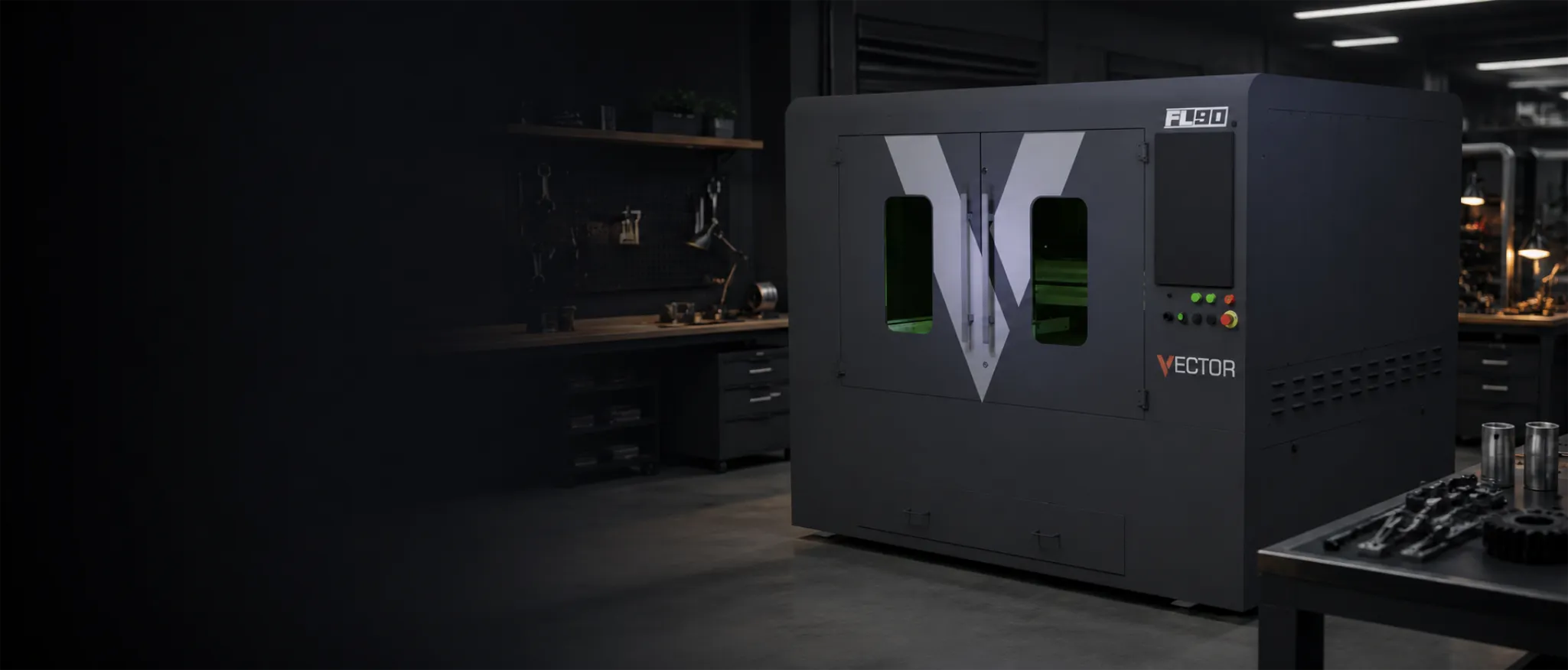
Compare current machines in the fibre laser cutter range. See the full metal list in what you can cut on a fibre laser. Match the edge with the assist-gas guide. Mid-format enclosed cells start with the Vector FL90.
Why these two metals sit together
Mild steel is the easy one. Stainless and aluminium are the sheets that often stay with a subcontractor, or come back with an edge you then have to grind. Both cut well on fibre when the gas and the head are right. They just do not behave like carbon steel.
That is usually a specification problem, not a reason fibre cannot do the work. Oxygen on stainless leaves a brown line. Aluminium without the right head can bounce light back into the lens. Workshops treat the pair as awkward because those two details get missed, then the parts come back late or need dressing before weld or paint.
For the full metal list and the planning-thickness table, use what you can cut on a fibre laser. This page is about the jobs.
Stainless jobs
Typical work is kitchens, food plant, architectural sheet and anything that has to stay clean in a damp or corrosive setting. The finish is usually the point. If the part will be welded or coated, you want an oxide-free edge, not a brown line you have to remove.
A brown oxide edge is not a fault in the metal. It is what oxygen cutting leaves. If the next operation is TIG or powder coat, that oxide costs time. Nitrogen costs more per hour than oxygen, but it often costs less than a person on a linisher.
Nitrogen is the usual starting point for that edge. Compressed air can work on some stainless jobs, but the oxygen in the air still changes the finish. The assist gas guide covers when nitrogen, oxygen or air is the sensible choice. Settle it on sample parts, not a rule of thumb.
If most of your week is thin stainless, buy for that mix. A one-off thick plate should not set the kW.
Aluminium jobs
Typical work is light assemblies, signage metalwork and transport parts. Aluminium is lighter than steel and it reflects light back toward the lens. A source and head without reflection protection can be damaged. Tell us the mix before you buy, not after the machine is on the floor.
Anodised or coated sheet will not always cut like bare plate. If the weekly mix includes both, say so. The parameter set and the gas can change. The head still needs reflection protection either way.
Nitrogen is well established on aluminium when you want a clean edge. Some jobs run on compressed air. Alloy, coating and thickness all matter, so cut a representative sheet before you lock the gas plant.
Same machine, different settings
You do not need two fibre lasers. Stainless and aluminium can share a Vector or Titan flatbed. You change gas, parameters and, on some jobs, the nozzle. You do need the head specified for reflective work if aluminium is in the weekly mix.
| Stainless | Aluminium | |
|---|---|---|
| Everyday jobs | Kitchens, plant, architectural sheet | Light assemblies, signage, transport |
| What usually matters | Clean, weldable or coat-ready edge | Weight and a tidy cut without lens risk |
| Specify | Nitrogen when the edge must stay oxide-free | A head with reflection protection |
How thick will it go?
At the same power, stainless and aluminium do not go as thick as carbon steel. In our Vector parameter data a 1.5 kW source lists stainless to 6 mm and aluminium to 4 mm; a 12 kW source lists 22 mm and 18 mm. Those are planning figures. Look up a job on the cut parameter tool, or use the power guide when kW is still open.
Which machine for this work
Vector and Titan both cut these metals. The difference is bed size, power and how you load the sheet — not whether stainless or aluminium is allowed.
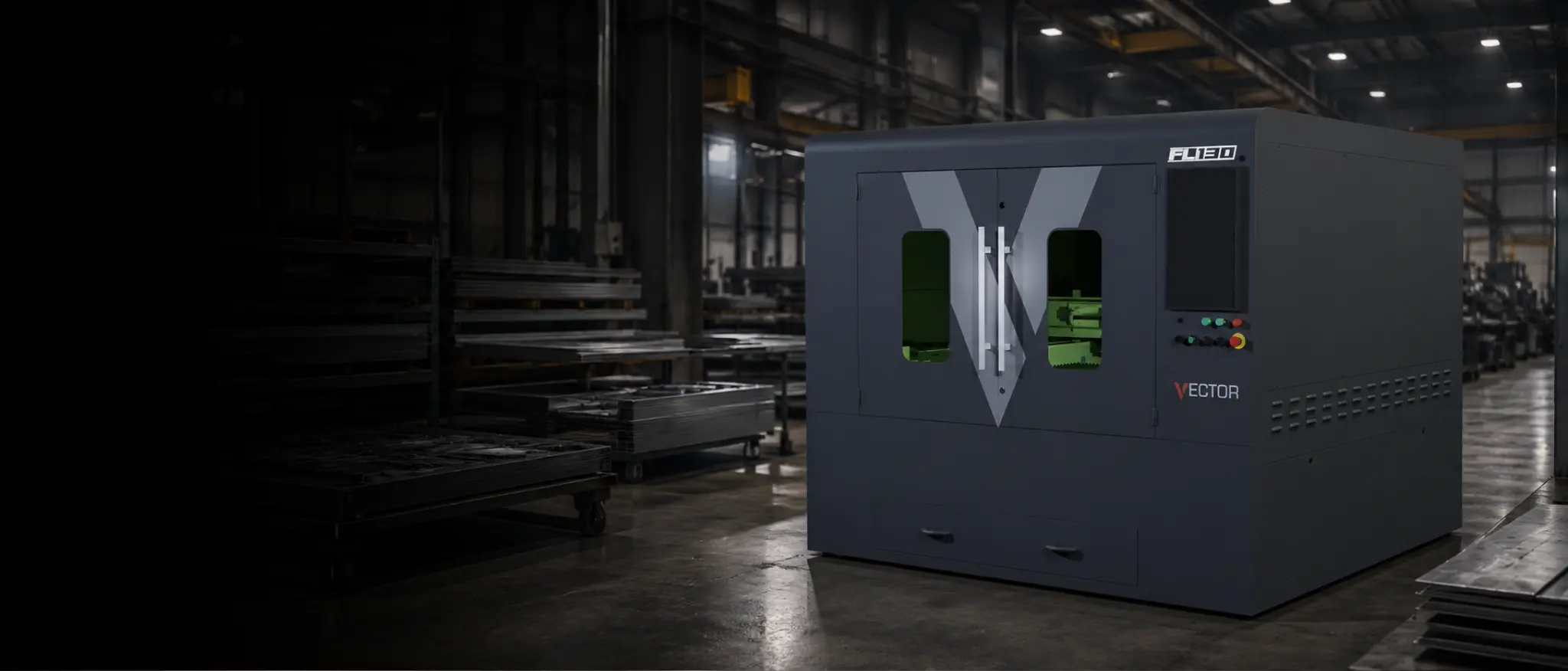
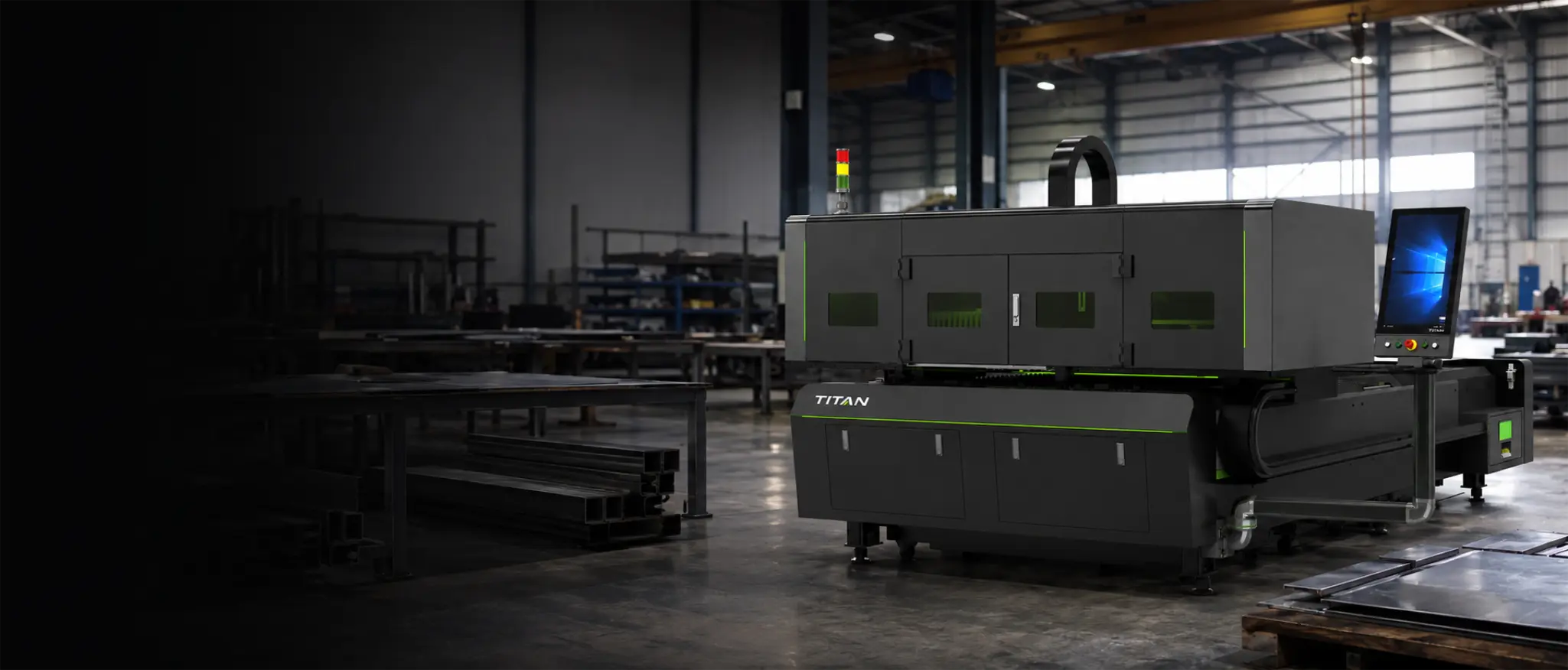
Vector is the enclosed cell for smaller sheets. FL90 is 1300 × 900 mm. FL130 is 1300 × 1300 mm. Titan N is the production flatbed family in 3015, 4020 and 6025 formats. Pick the bed for the sheet you buy, then the kW for the thickness you cut most weeks. Do not buy a larger Titan because stainless sounds more industrial.
- Metals and thicknesses you quote most weeks — not the heaviest plate you have done once
- Whether the stainless edge must be weld-ready or coat-ready
- How much of the week is aluminium, including coated or anodised sheet
- The sheet size you actually buy
- Whether the work is weekly nests or the odd subcontract job
Watch stainless and aluminium cut
These are shop-floor recordings, not animations. Everyday thicknesses — 3 mm stainless and 1.5 mm aluminium — so you can see the cut, not a headline maximum.
When it is worth bringing in-house
If you send the same stainless or aluminium nests out every week, a fibre laser usually pays in lead time and in control of the edge. Count the nests, not the invoices. If you are sending the same kitchen panels or sign trays out every week, you are paying someone else’s queue.
If the work is a few jobs a month, keep the subcontractor and cut what you already run in-house. The machine will sit while you still have to look after gas, extraction and training. More power is not automatically better. Match the machine to the hours and the finish you sell.
See the machines
Compare Vector and Titan fibre lasers, including the mid-format Vector FL90 and production Titan N Series. For bed, kW and shuttle in buying order, use how to choose a fibre laser.
Talk through the stainless and aluminium you quote with the team: UK 0121 541 1444 · Ireland (+353) 83 804 8820.
Useful next reads
- What can you cut on a fibre laser?
The full metal list, thickness by kW and shop-floor cut videos.
- Assist gas guide
Nitrogen, oxygen and air — and what they do to a stainless or aluminium edge.
- Fibre laser power guide
Which kW band matches the thicknesses you cut most weeks.
- Cut parameter tool
Look up speed, gas and nozzle for a given metal and thickness.
- How to choose a fibre laser
Bed size, power, shuttle tables and support, in buying order.
- Fibre laser range
Current Vector and Titan machines, with specifications and support.
Common questions
Can a fibre laser cut stainless and aluminium?
Yes. Both are everyday metals on Vector and Titan fibre lasers. Stainless usually needs the right assist gas for the edge you want. Aluminium needs a source and head specified for reflective work.
Do I need nitrogen for stainless?
When the edge must stay clean for welding or coating, nitrogen is the usual starting point. Compressed air can be used on some stainless jobs, but the oxygen in the air changes the edge. Confirm it on a sample, not a catalogue line.
Will aluminium damage the laser?
It can, if the head has no reflection protection. Aluminium bounces light back toward the lens. Tell us the mix so the head is right before delivery.
How thick can fibre cut stainless and aluminium?
It depends on power. In our Vector parameter data a 1.5 kW source lists stainless to 6 mm and aluminium to 4 mm; a 12 kW source lists 22 mm and 18 mm. Those are planning figures. Use the parameter tool for a specific job.
Should I bring all stainless and aluminium work in-house?
Only if it is regular. Repeat nests and a finish you need to control are the usual reason. Occasional jobs can stay with a subcontractor. Match the machine to the hours you will actually cut.