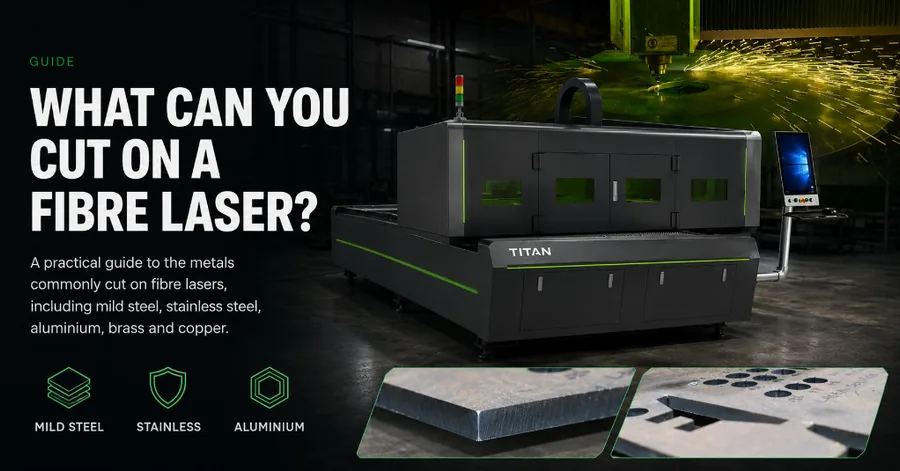
A fibre laser is a metal cutter. Mild steel, stainless steel, aluminium, brass and copper are the usual list. How thick you can go depends on the laser power and the assist gas. Wood, acrylic and plastic are not on it.
Start with the metals you cut every week, then match power and bed to that mix. Compare Vector and Titan fibre lasers, check a thickness on the cut parameter tool, and use the fibre cutting guide when you need the process explained from the start.
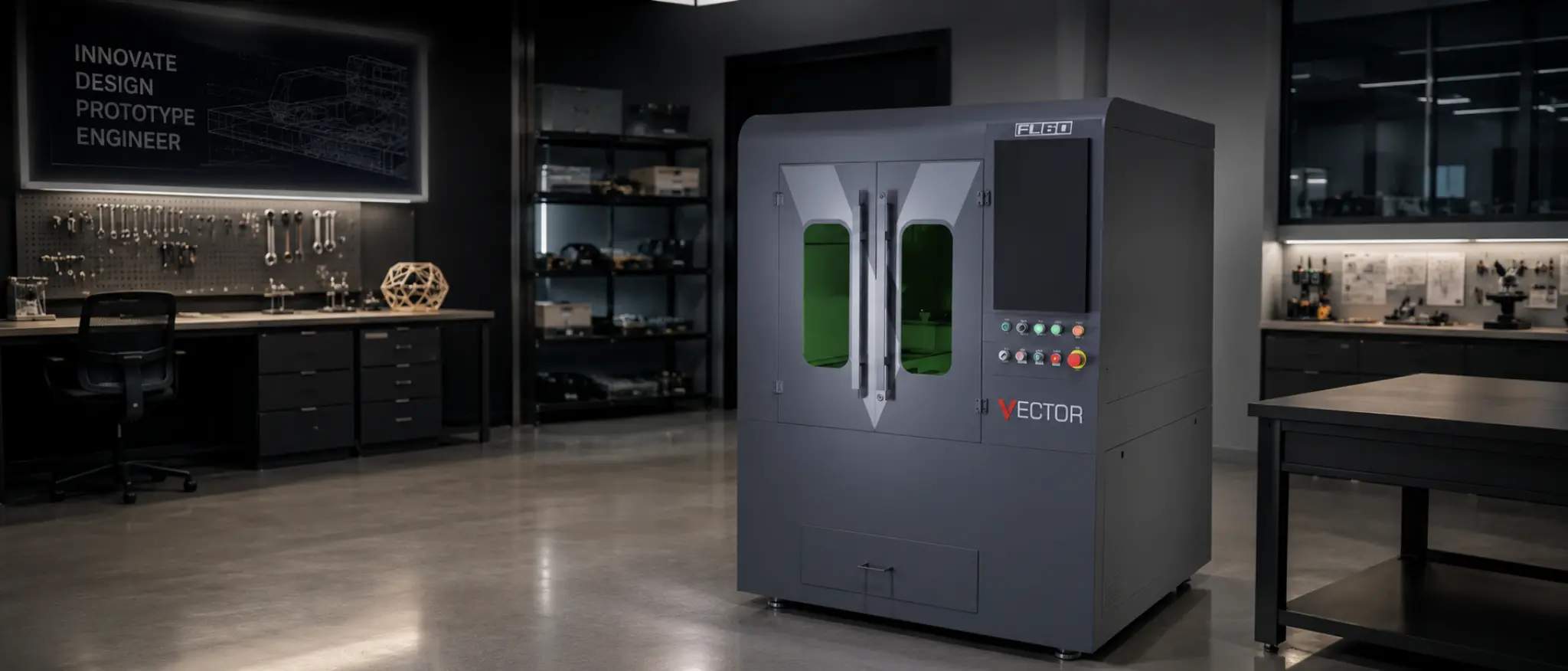
Compare current machines in the fibre laser cutter range. Match kW to everyday thickness in the fibre laser power guide. Look up a specific cut on the cut parameter tool. Compact enclosed cells start with the Vector FL60.
How a fibre laser cuts metal
People ask this because fibre and CO₂ are both sold as laser cutters. They are not the same tool. Fibre is what we specify for sheet metal. Our CO₂ machines are for wood, acrylic and similar non-metals. Large high-power CO₂ lasers can cut metal, but they are older, use more energy and are being replaced by fibre.
The source sends a high-power beam through fibre to the cutting head. The head focuses that beam onto the sheet. The metal melts or vaporises along the path, and assist gas — usually oxygen or nitrogen — blows the melt out of the kerf. That is the process. For how the machine is specified, use the fibre laser cutting guide.
Metals you can cut
Most workshops come to fibre for the metals they already quote: carbon steel for everyday fabrication, stainless for kitchens and plant, aluminium for lighter parts. Brass and copper are routine once the head is specified for reflective work. Titanium is less common, but Titan machines will cut plate when speed, gas and parameters are set for that job.
Write down the metals and thicknesses you quote most weeks. That list decides the machine. A shop that lives on 3 mm mild steel and 2 mm stainless does not need the same power as one that regularly cuts 12 mm plate.
| Metal | Typical work | What to watch |
|---|---|---|
| Mild steel (carbon steel) | Panels, brackets, frames and general fabrication | The volume material. Almost any fibre source will cut it; thickness rises with kW. |
| Stainless steel | Kitchens, food plant, architectural and corrosion-sensitive parts | A common customer metal. Nitrogen is often used when you need a clean, oxide-free edge. |
| Aluminium | Light assemblies, signage metalwork and transport parts | Reflective. The source and head must be specified for it, or you can damage the lens. |
| Brass and copper | Fittings, decorative work and electrical parts | High reflectivity. Needs a head with reflection protection. |
| Titanium | Less common plate work | Titan fibre lasers, with the right speed, assist gas and parameters. |
Assist gas changes the edge as much as power does. Nitrogen and oxygen are the usual pair — see the assist gas guide before you assume a finish. For the stainless and aluminium jobs themselves, see cutting stainless and aluminium on a fibre laser.
How thick will it go?
A 3 kW machine will not do the same work as a 12 kW machine. The table below is the highest thickness listed in our Vector cut-parameter data at each power. Use it to plan. It is not a promise that every job at that thickness will look the same. Edge quality still depends on gas, nozzle, focus and the part.
Buy for the thickness you cut most weeks, not the heaviest plate you have quoted once. A machine that lists 22 mm carbon steel will still spend most of its life on thinner sheet if that is what you sell.
| Power | Carbon steel | Stainless | Aluminium | Brass | Copper |
|---|---|---|---|---|---|
| 1.5 kW | 12 mm | 6 mm | 4 mm | 4 mm | 3 mm |
| 3 kW | 18 mm | 8 mm | 6 mm | 6 mm | 5 mm |
| 6 kW | 22 mm | 14 mm | 12 mm | 10 mm | 6 mm |
| 12 kW | 28 mm | 22 mm | 18 mm | 14 mm | 10 mm |
Look up a specific thickness on the fibre laser cut parameter tool. For which kW band fits your weekly mix, use the power guide.
Watch these metals cut
These are shop-floor recordings from Mantech fibre lasers, not animations. The first four are everyday thicknesses — 3 mm steel and 1.5 mm aluminium and brass. Below them is 15 mm mild steel on a 12 kW source, so you can see a thicker plate as well. Open the full demo if you want the longer take.
What a fibre laser will not cut
Fibre will not cut wood, MDF, acrylic, paper, fabric or similar non-metals. For that work we specify a CO₂ laser. High-power CO₂ machines can cut metal, but they use more energy and are an older process — fibre has taken that job. Many shops run both: fibre for sheet metal, CO₂ for engraving and plastics.
Tube, box section and other profiles are a different machine. Flatbeds cut sheet. The Titan T6524 is the dedicated tube platform — see the tube fibre laser guide.
Reflective metals need the right head
Aluminium, brass and copper bounce light back toward the lens. A source and head without reflection protection can be damaged. Tell us the mix before you buy, not after the machine is on the floor. We will specify the head for the metals you actually cut.
A cover on the machine
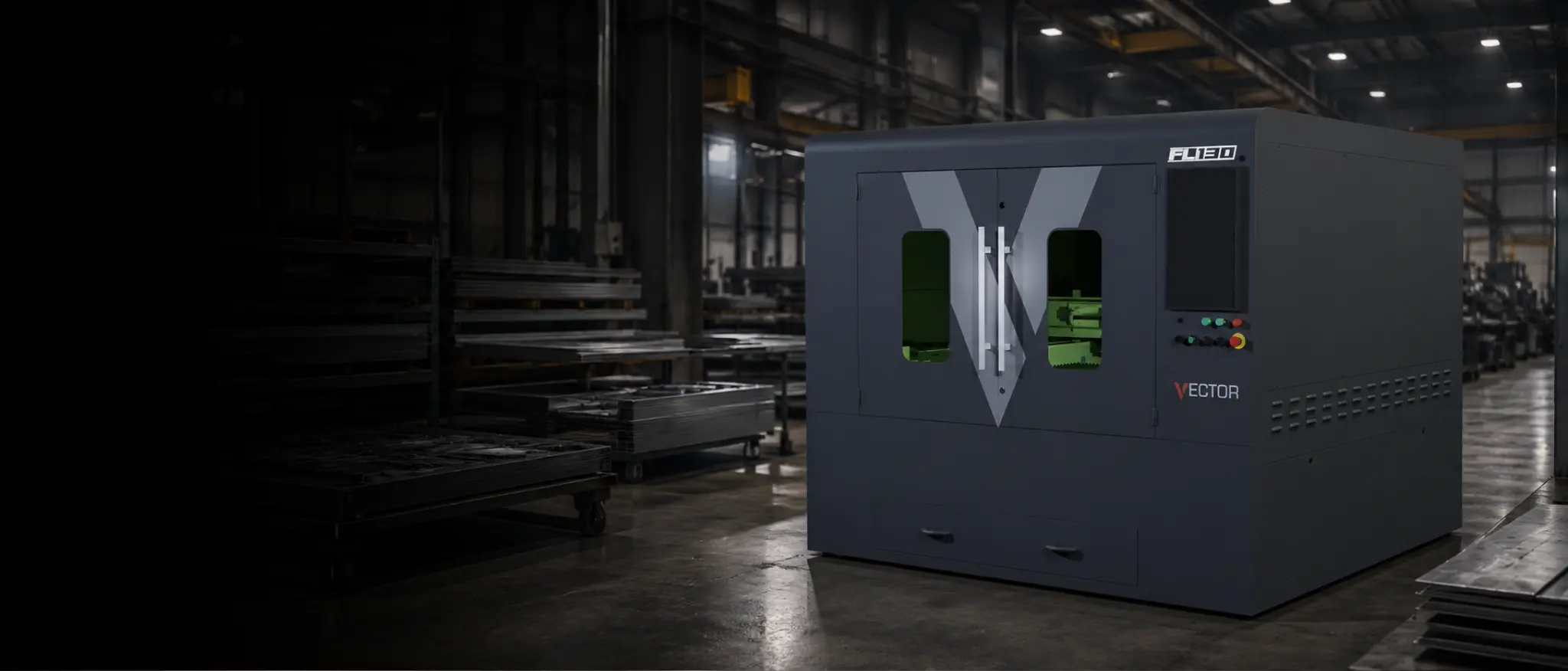
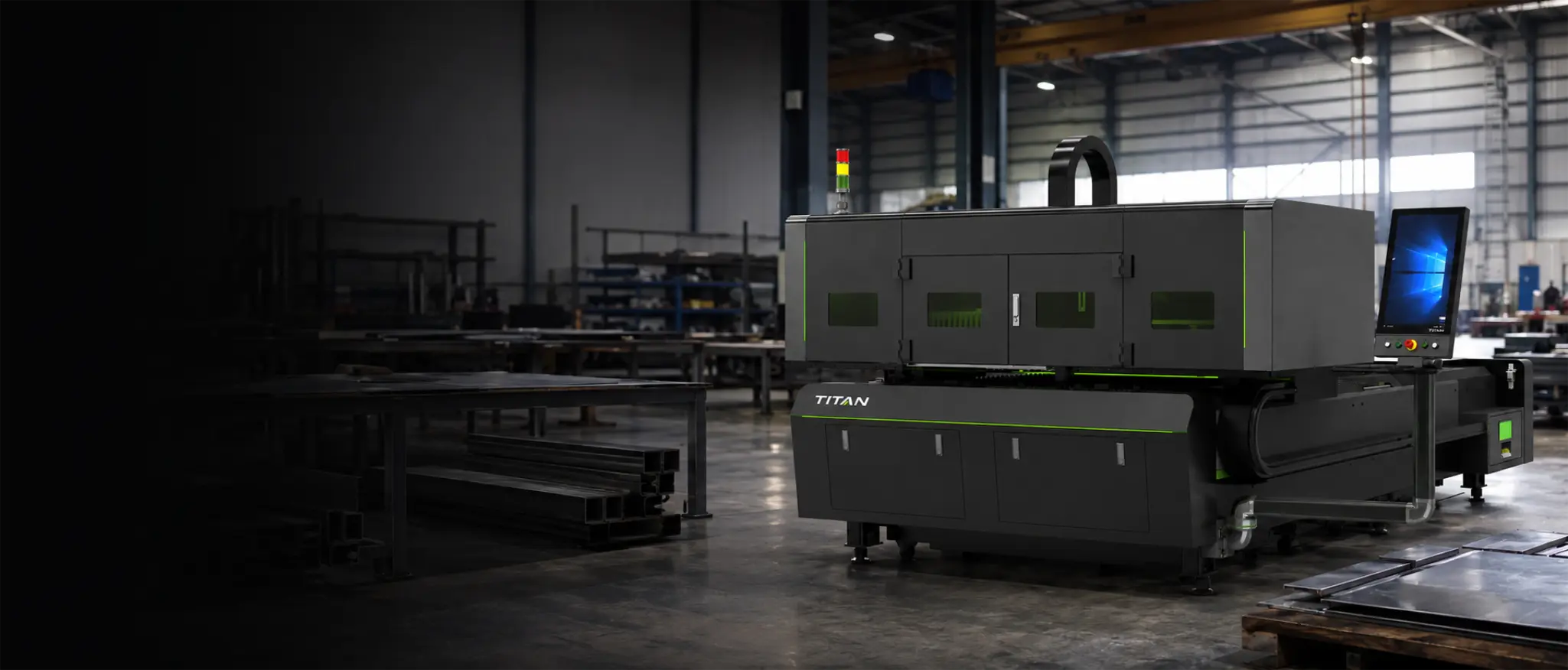
In the UK the expectation is a protective cover, so a stray or reflected beam cannot reach the operator. Vector machines are enclosed cells. Titan flatbeds are specified with a gantry enclosure or a full enclosure, depending on the series. Read what to look for in fibre laser safety before you look at an open-bed import. Irish sites are planned and installed by Mantech Ireland on the same enclosed-machine basis.
See the machines
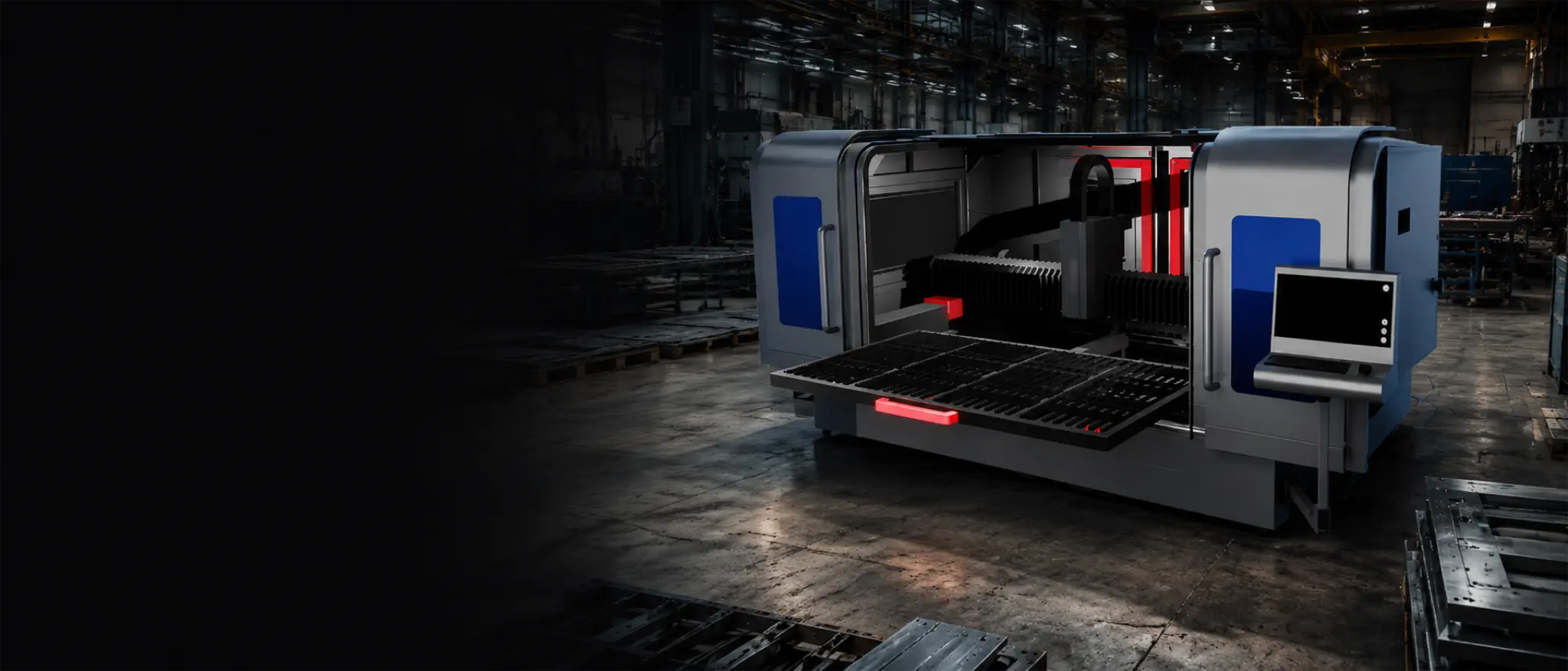
Compare Vector and Titan fibre lasers, including the compact Vector FL60 and production Titan N Series. For the buying sequence — bed, kW, shuttle, software — use how to choose a fibre laser.
Talk through your metals and thicknesses with the team: UK 0121 541 1444 · Ireland (+353) 83 804 8820.
Useful next reads
- Cutting stainless and aluminium on a fibre laser
Everyday jobs, nitrogen, reflective heads and when to bring the work in-house.
- Fibre laser cutting guide
How the process works, applications and where Vector and Titan fit.
- Fibre laser power guide
Which kW band matches the thicknesses you cut most weeks.
- Cut parameter tool
Look up speed, gas and nozzle for a given metal and thickness.
- Assist gas guide
Nitrogen, oxygen and compressed air — and what they do to the edge.
- How to choose a fibre laser
Bed size, power, shuttle tables and support, in buying order.
Common questions
Can a fibre laser cut wood or acrylic?
No. Fibre is a metal process. Wood, MDF, acrylic, paper and similar materials need a CO₂ laser. High-power CO₂ can cut metal, but it is older and more energy-intensive than fibre. Many workshops run fibre for sheet metal and our CO₂ machines for engraving and plastics.
How thick can a fibre laser cut mild steel?
It depends on power. In our Vector parameter data a 1.5 kW source lists carbon steel up to 12 mm and a 12 kW source up to 28 mm. Those are planning figures. Confirm the finish you need on the parameter tool before you buy for a one-off thick plate.
Will it cut aluminium, brass and copper?
Yes, on a source and head specified for reflective metals. Without that protection the reflected beam can damage the lens. Tell us the mix so the head is right before delivery.
Do I need an enclosed machine?
In the UK the expectation is a protective cover so a reflected beam cannot reach the operator. Vector cells are fully enclosed. Titan flatbeds are offered with a gantry enclosure or a full enclosure. We do not recommend an open-bed import for this work.
Can one fibre laser cut both sheet and tube?
A flatbed cuts sheet. Tube, box and profile need chucks and different software. We specify those as separate platforms: Vector or Titan flatbeds for sheet, and the Titan T6524 for tube.