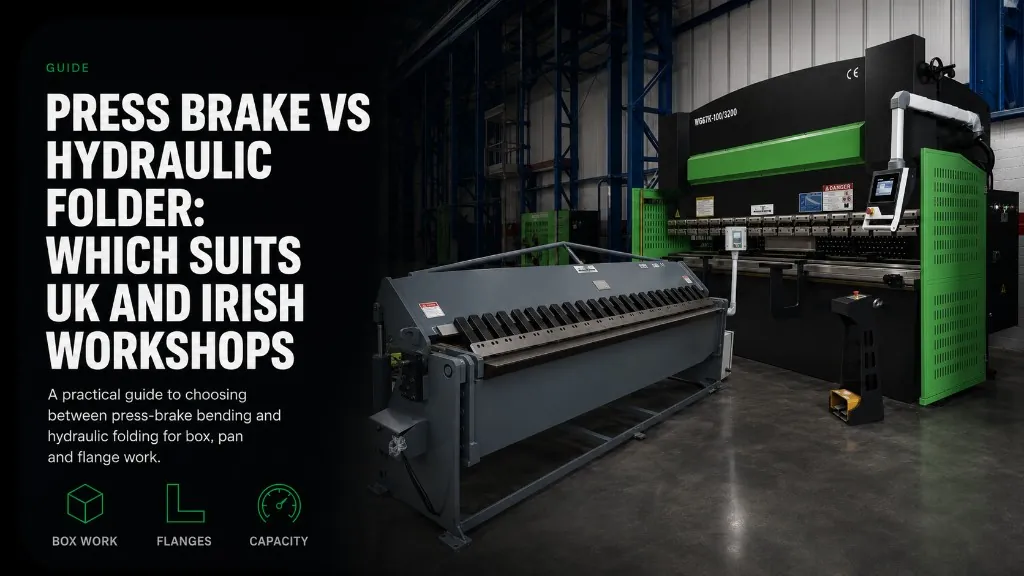
A press brake and a hydraulic folder both bend sheet, but they do not do the same work. One uses a punch and die. The other clamps the sheet and folds the free edge. If you buy the wrong one, you will spend the year fighting boxes on a brake, or running out of capacity on a folder that was never meant for thick flanges.
Boxes, trays and light panels usually belong on a hydraulic folder. Flanges and thicker work belong on a press brake. If you already know you need a brake, how to choose a CNC press brake covers tonnage and controls.
Folder or brake — at a glance
- Choose a hydraulic folder when most of the week is boxes, trays, covers and large panels in light sheet.
- Rhino W62Y folders take 2000–3200 mm folding lengths and are rated to 4 mm mild steel.
- Choose a press brake when you need more force, programmed flanges, or a mixed run of brackets and thicker work.
- Plenty of workshops run both: the folder for the boxes, the brake for the brackets.
- Neither machine cuts the blanks. That still sits with a guillotine or a laser.
How they actually bend the sheet
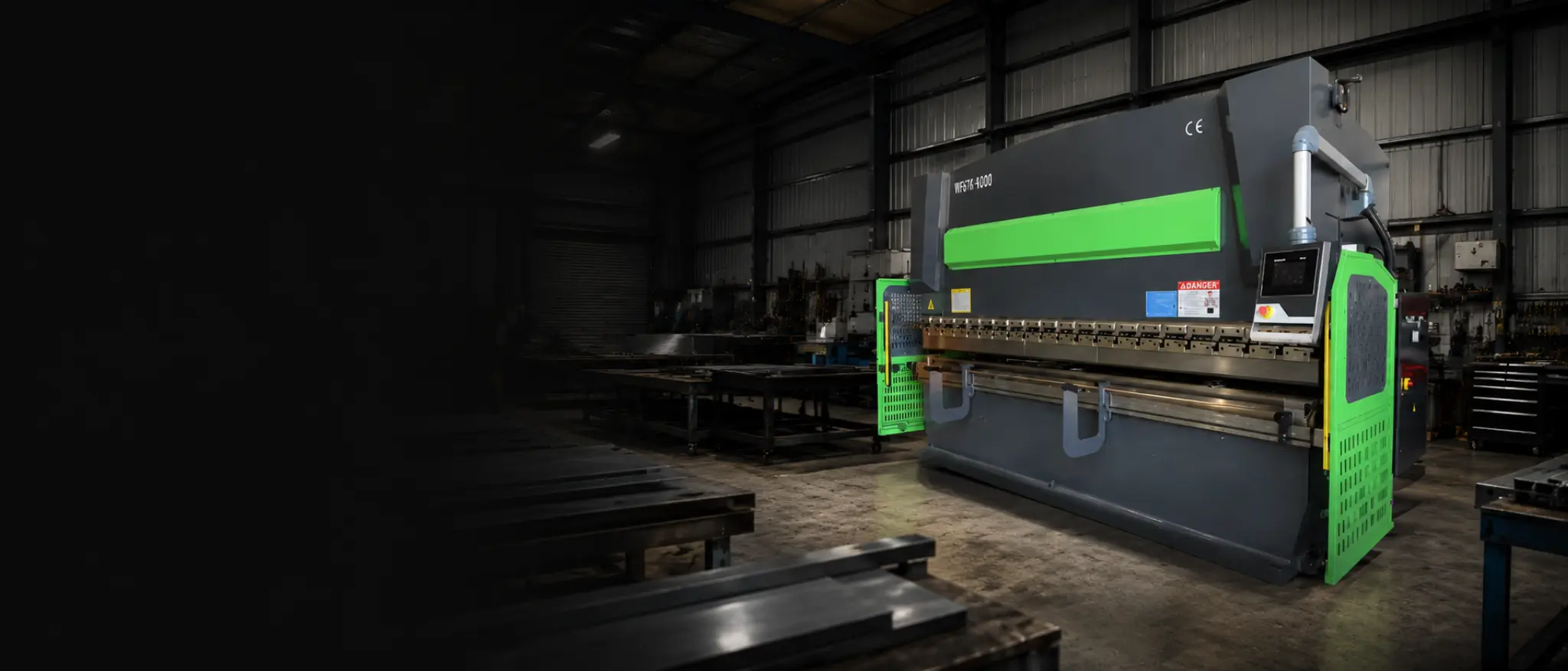
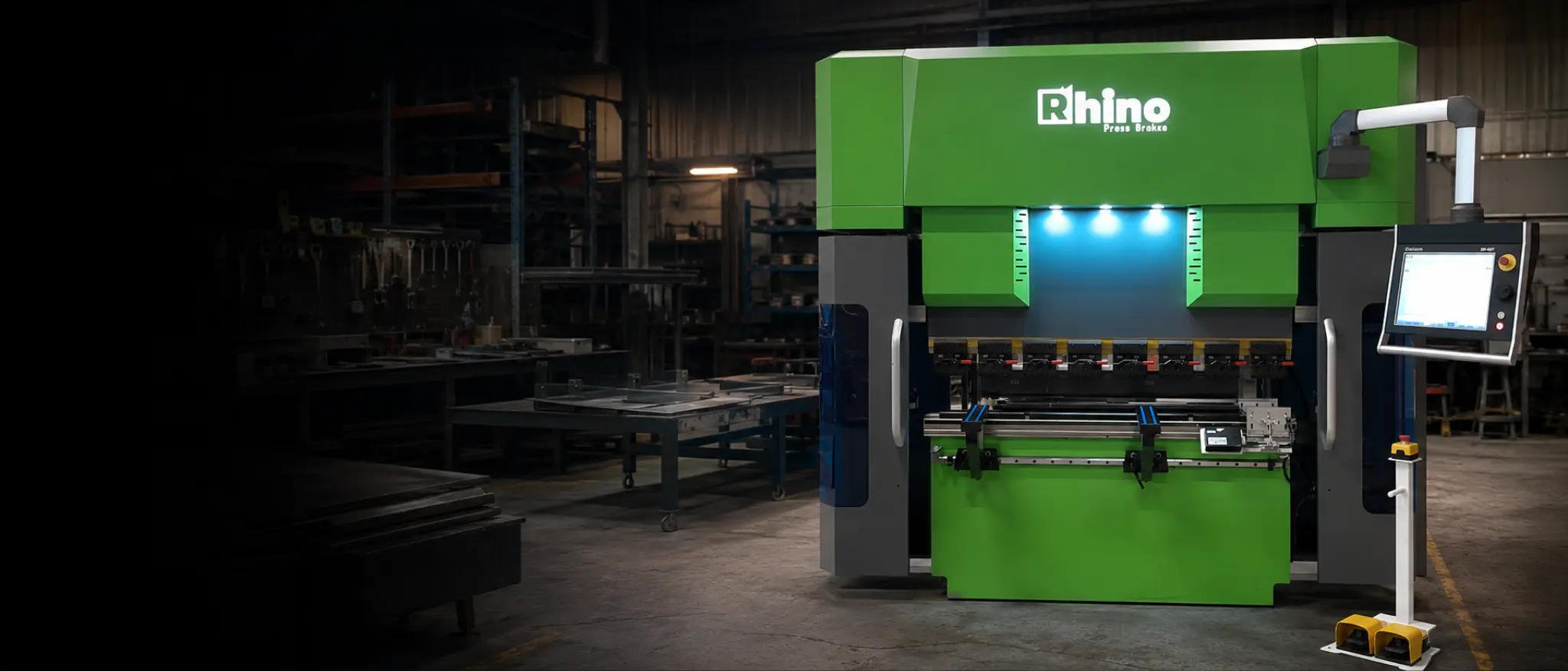
On a press brake the sheet sits on a V-die. The punch comes down and forms the bend. You change the punch and die to suit the job, and the backgauge sets the flange length. That is why a brake suits small returns, several bends on one part, and thicker material.
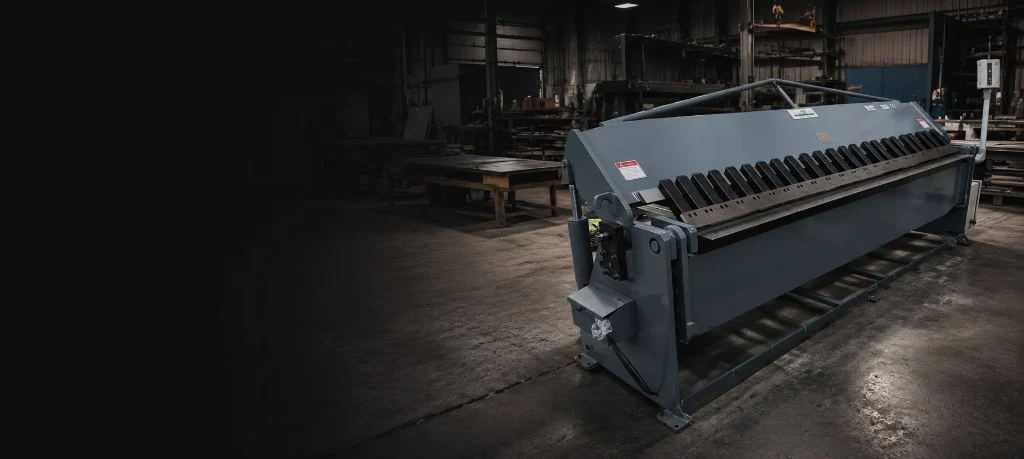
On a hydraulic folder the sheet is clamped. A folding beam then swings the free edge up to the angle stop. The operator supports the sheet. Segmented fingers on the clamp let you fold the sides of a box without the tool hitting the ends you have already turned up. On the Rhino W62Y range that is a selector switch or foot pedal, not a long CNC programme.
| Question | Press brake | Hydraulic folder |
|---|---|---|
| How it bends | Punch into a V-die | Clamp, then a folding beam lifts the free edge |
| Typical jobs | Brackets, flanges, mixed fabrication | Boxes, trays, covers, large light panels |
| Tooling | Punches and dies, changed for the job | Segmented top tooling for box and pan work |
| Control | CNC — Delem on Rhino machines | Manual angle stop, selector switch or foot pedal |
| Rhino capacity | Tonnage and bed length set by the model | 4 mm mild steel · 2000–3200 mm folding length |
| Buy this first when | Everyday flanges and thicker work lead the week | Box and pan work in light sheet leads the week |
When a hydraulic folder is the better buy
If your quotes are mostly boxes, pans, trays and covers, a folder is usually quicker and kinder on the sheet. You fold the sides without a long string of punch and die changes. Large thin panels are easier to handle as well, because the sheet sits on the bed instead of hanging in a V-die.
The Rhino W62Y range is a simpler machine than a press brake: hydraulic clamp and fold, optoelectrical side guards, a 500 mm push/pull backstop, and segmented top tooling. Three standard folding lengths cover 2000 mm, 2500 mm and 3200 mm. Match the bed to the longest panel you fold regularly, not the one oversized job that turned up once.
The model list and standard equipment sit on the hydraulic folder range. A folder is not the answer once regular work goes past 4 mm mild steel, or when the week is full of small programmed flanges.
When a press brake is the better buy
A press brake is the usual forming machine for general fabrication. Brackets, enclosure returns, mixed thicknesses and stainless that needs more force all sit here. You programme the flange, change the tooling, and repeat the same part without resetting a manual angle stop every time the job changes.
Most workshops start on a Rhino torsion-bar machine with Delem DA-41T. That covers everyday flanges without buying more axes than you will use. Premium CNC is for shops that already know they need more backgauge movement and tighter angle control. That is a later choice, once you are sure you need a brake at all.
Compare Rhino torsion-bar press brakes and Rhino Premium CNC. If you already know you need a brake, how to choose a CNC press brake walks tonnage, bed length and controls. The class split is in torsion bar vs CNC press brake.
Thickness, length and the jobs that sit in between
Do not buy a folder because it looks simpler if your regular work is thicker than 4 mm mild steel, or stainless that needs more force. Do not buy a heavy press brake because it can fold a box if that box is most of your week and the sheet is 3 mm. Size the machine to the work you do every week.
If a brake is the right process, check force before you shortlist a model. The press brake tonnage guide explains the inputs, and the bending calculator is there for a first pass on a real job. Folder capacity is already set: 4 mm mild steel on every W62Y model.
Boxes, trays and segmented tooling
Segmented fingers are the reason folders exist. You can form a box on a press brake, but it takes more setup and the right tooling. On a folder that is the everyday method: clamp the sheet, fold one side, turn the part, fold the next. Sign trays, electrical covers, HVAC panels and similar work sit naturally on that workflow.
A brake still wins when the same part needs several different flanges, a tight return, or a thickness the folder cannot take. If those jobs are occasional, keep them for a brake you already have — or for a second machine later. Do not buy a press brake only because one awkward bracket appears on the drawing list.
Can you run both?
Yes. A lot of shops keep a folder for panels and a brake for brackets. The folder stays set up for the boxes. The brake stays free for mixed flanges. That split is usually cleaner than stretching one machine across both kinds of work.
Straight cutting still comes first. Compare industrial guillotines if you blank rectangles before you fold or bend. The Kes Power case study shows a press brake in electrical manufacturing, which is useful context if enclosure work is on both machines.
What to bring to a quotation
- Your regular forming jobs — material, thickness, longest bend or fold, and whether the part is a box or a flange.
- How often the job changes. A folder likes repeat panel work. A CNC brake likes mixed programmes.
- If most jobs are boxes in 4 mm mild steel or thinner, start on the W62Y range.
- If most jobs are flanges, thicker sheet or mixed programmes, start on a press brake.
- A sample or a drawing. A short conversation on real parts settles this faster than a spec sheet.
Next step with Mantech
Mantech supplies Rhino press brakes and Rhino W62Y hydraulic folders. Delivery, installation and operator training are arranged for your site in the UK or Ireland. Bring the parts you form every week. That is the only list that matters.
Compare press brakes and hydraulic folders, or call the team — UK 0121 541 1444 · Ireland (+353) 83 804 8820.
Useful next reads
- Rhino W62Y hydraulic folders
Beds, 4 mm mild-steel rating and the standard folding package.
- Rhino torsion-bar press brakes
Everyday CNC bending when flanges lead the week.
- How to choose a CNC press brake
Tonnage, bed length and controls once you know you need a brake.
- Torsion bar vs CNC press brake
Which Rhino brake class to buy after the process is settled.
- Press brake tonnage guide
Force, V-die and thickness checks for brake jobs.
Frequently asked questions
Can a hydraulic folder replace a press brake?
Only if your regular work is boxes, trays and light panels within 4 mm mild steel. A folder will not replace a press brake for thicker sheet, small programmed flanges or mixed bracket work. If those jobs lead the week, start on a brake.
Can a press brake do box and pan work?
Yes, with the right tooling and more setup. It is rarely as quick as a folder when boxes are most of the week. If that is the main workload, buy the folder. Keep the brake for flanges, or add one later.
What thickness can a Rhino hydraulic folder take?
Every current W62Y model is rated to 4 mm mild steel. Folding lengths are 2000 mm, 2500 mm and 3200 mm. Thicker work, or stainless that needs more force, belongs on a press brake. Do not treat the 4 mm figure as a target for every job — size to what you fold regularly.
Does a hydraulic folder need CNC?
The Rhino W62Y machines use a manual angle stop with a selector switch or foot pedal. That is enough for repeat panel and box work. CNC belongs on the press brake, where you are programming flanges and changing jobs through the day.
Should I buy both a press brake and a folder?
If both workloads are regular, yes. Many shops keep the folder on boxes and the brake on brackets. If only one kind of work fills the week, buy that machine first. You can add the second when the other workload stops being occasional.